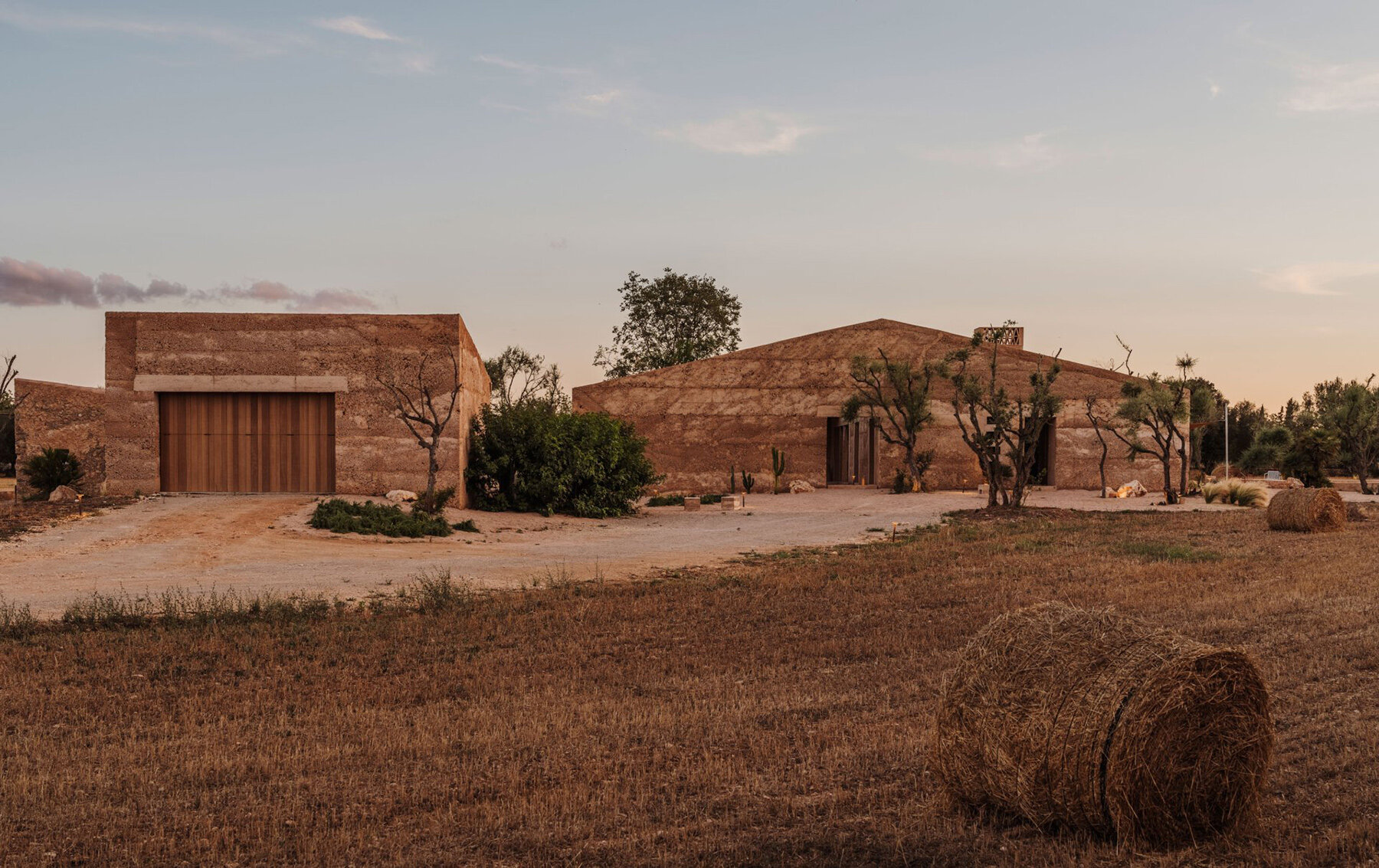
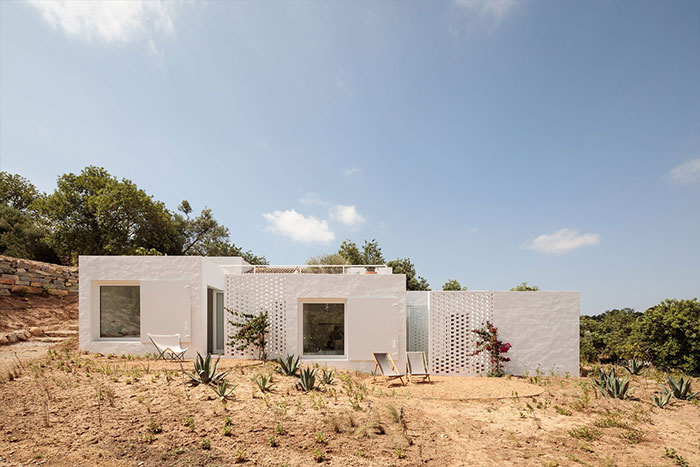
The design forms a cluster of spaces that offer varying levels of protection from the elements. These semi-enclosed areas create a sheltered environment, providing refuge from the intense sun and wind of the open field. Despite the protective design, the gaps within the structure offer expansive views of the landscape, maintaining a connection to the outdoors. This spatial arrangement fosters a sense of intimacy and enclosure while allowing for flexibility in how the space is used. Whether gathering with friends or enjoying a moment of solitude, the layout encourages a variety of activities in a comfortable and adaptable setting.
Munarq refers to Ca na Pau as an ‘architectural oasis,’ describing it as a place of respite and refuge. This concept extends beyond the physical design, representing the home as a shelter that offers relief from the challenges of daily life. The presence of vegetation and water within the patio contributes to this oasis-like atmosphere, reinforcing the idea of the house as a retreat. Despite its openness to the outdoors, the house retains a sense of privacy and intimacy, evoking the memory of old Mallorcan homes weathered by time. This juxtaposition between public and private spaces creates a dynamic living environment, where residents can engage with the landscape while still enjoying a sense of seclusion.
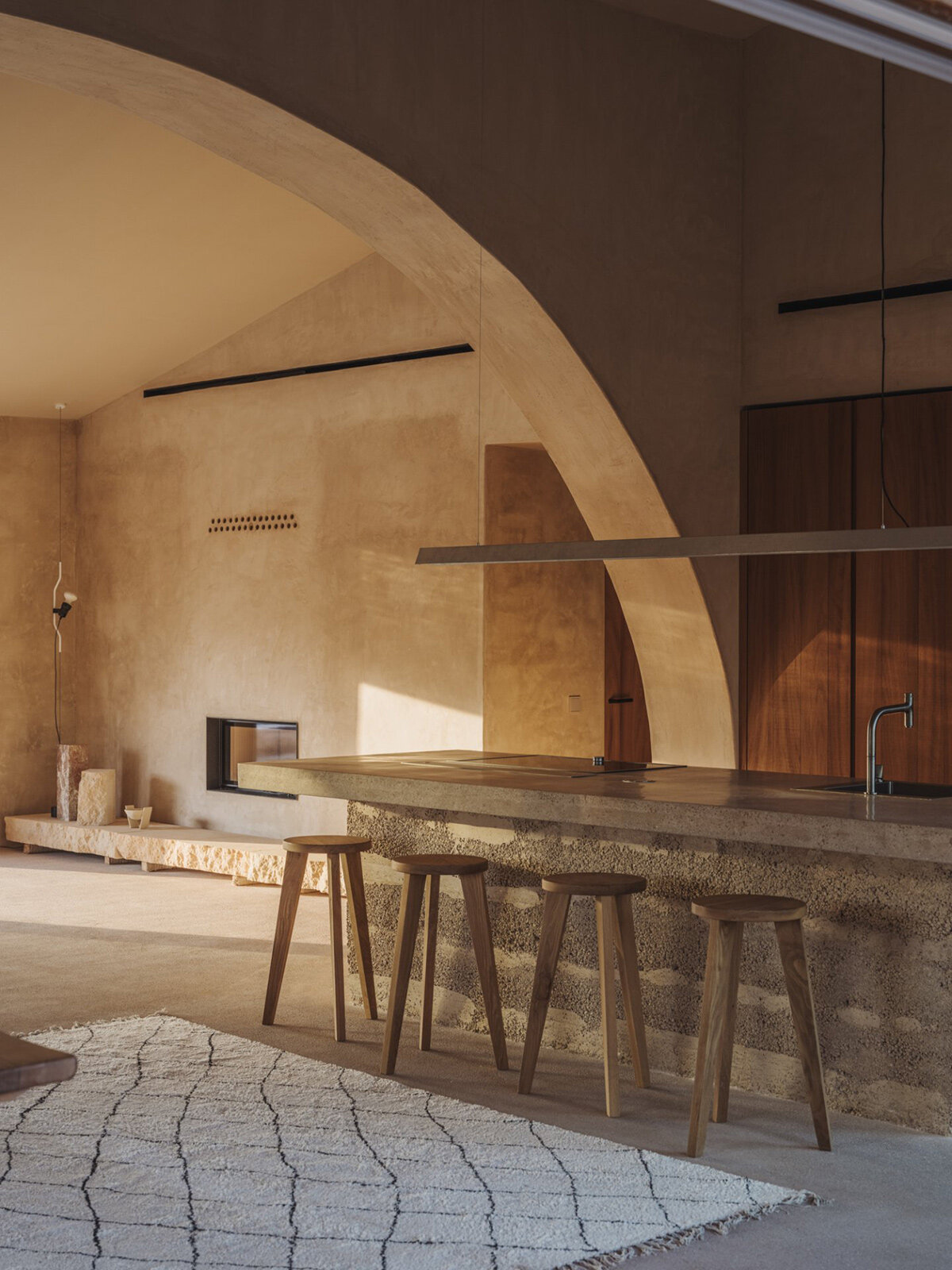
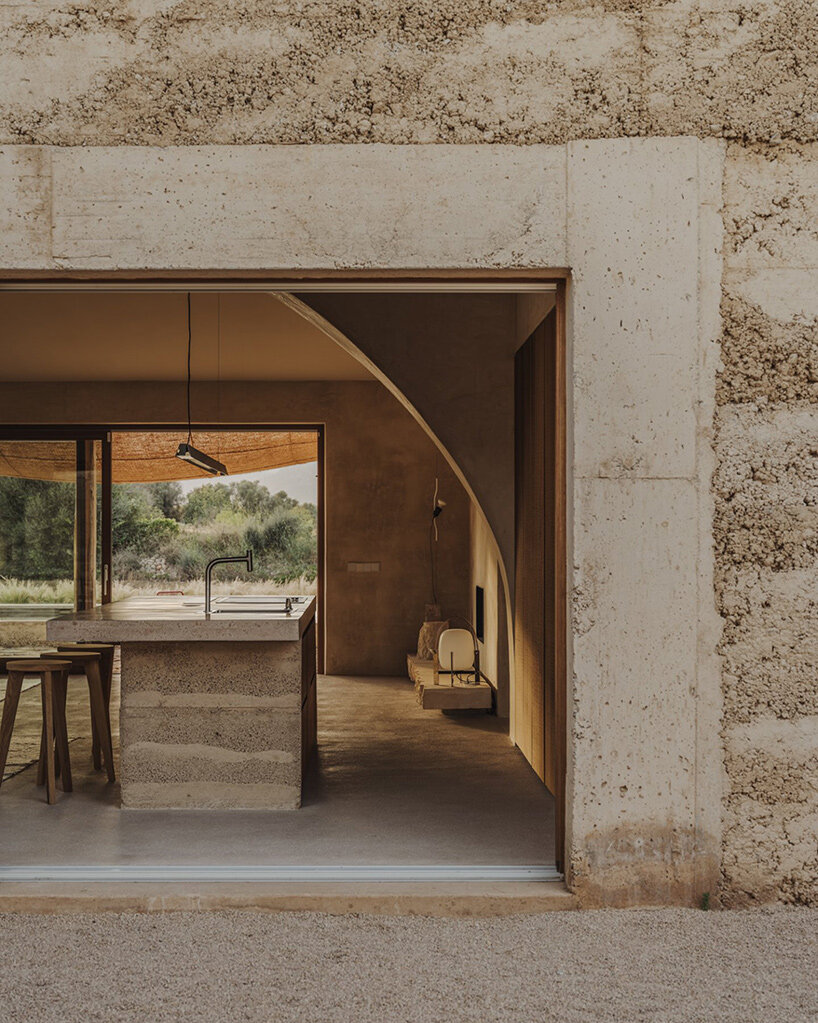
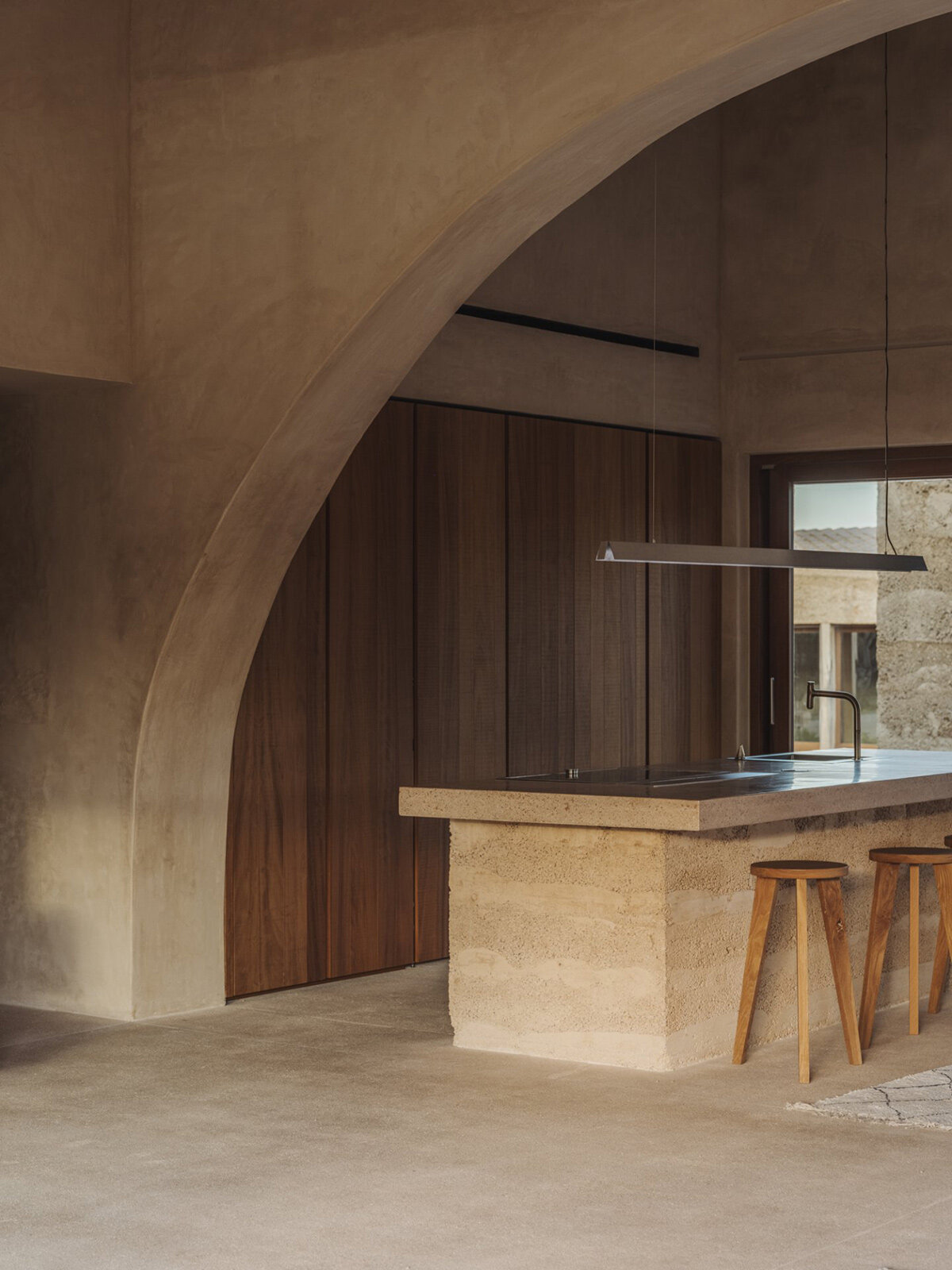
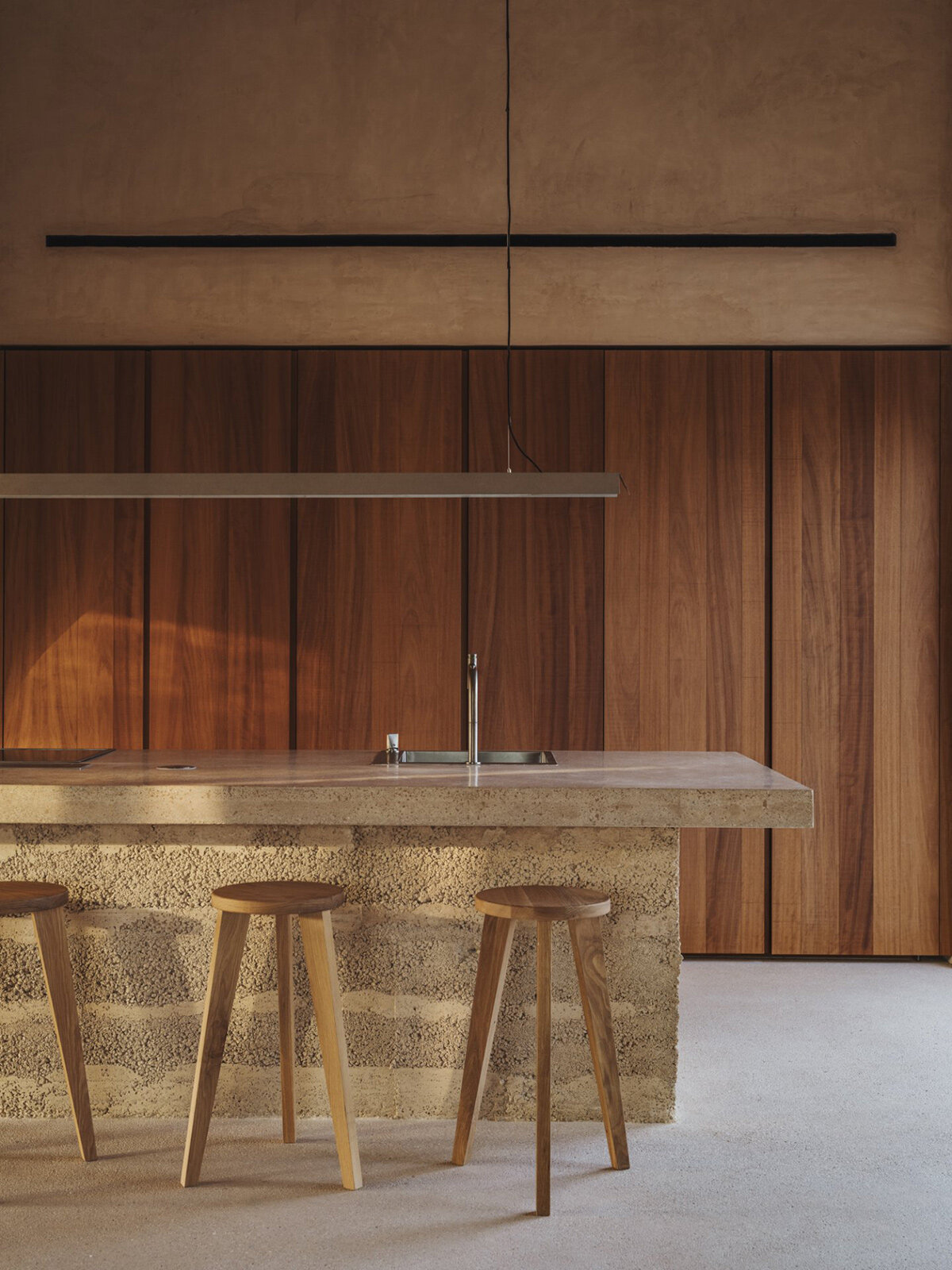
One of the most distinctive features of Ca na Pau is its use of ballast walls, a traditional construction method native to Mallorca. Ballast walls are made from a mixture of soil, lime, and aggregates of various sizes, forming thick, durable structures that provide excellent insulation. These walls not only offer protection from the elements but also promote sustainability by using locally available resources. The house’s exterior walls are built using this technique, with an additional layer of wood fiber insulation and local ceramic bricks for added thermal performance. An open diffusion membrane between the layers ensures that the structure remains breathable, preventing moisture buildup and enhancing the building’s longevity.