At “The Time Is Always Now” Exhibition, a Welcome Reframing of Black Figures in Art
At “The Time Is Always Now” Exhibition, a Welcome Reframing of Black Figures in Art
Think of Dido Elizabeth Belle, shown alongside her cousin and playmate Lady Elizabeth Murray in David Martin’s circa 1770s portrait at Scone Palace, which inspired Amma Asante’s 2013 film, Belle. Or Fanny Eaton, a 19th-century Jamaican woman who regularly modeled at London’s Royal Academy of Arts and for the Pre-Raphaelites. Or Laure, who sat for Édouard Manet and appears as a well-dressed servant to his naked Olympia in 1863. More commonly, though, what we see across centuries of Western art is a cast of unidentified Black figures—exoticized, sexualized, or servile—included in a scene to reflect the wealth and status of the painting’s main subjects, rather than acknowledged as people in their own right.
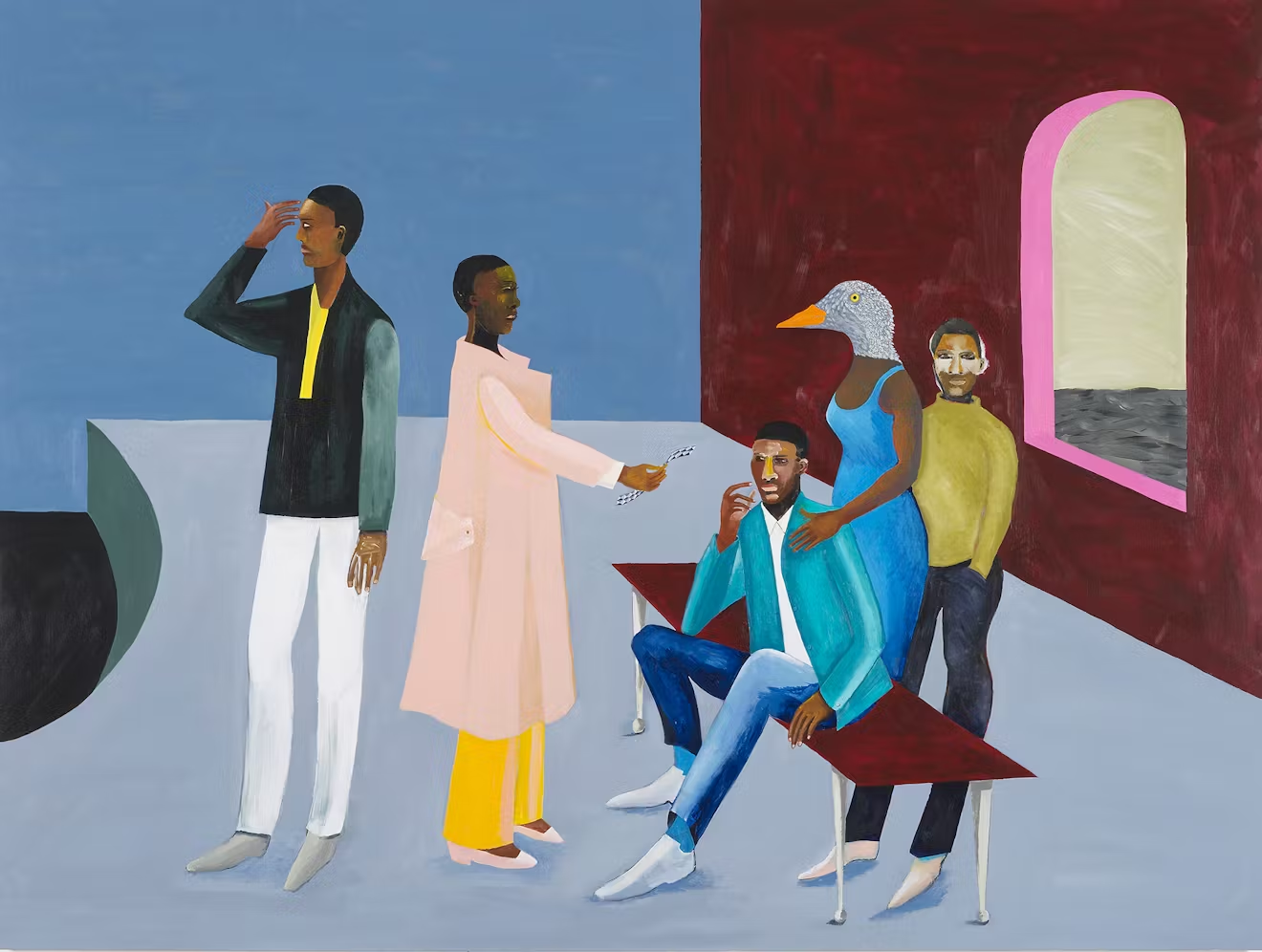
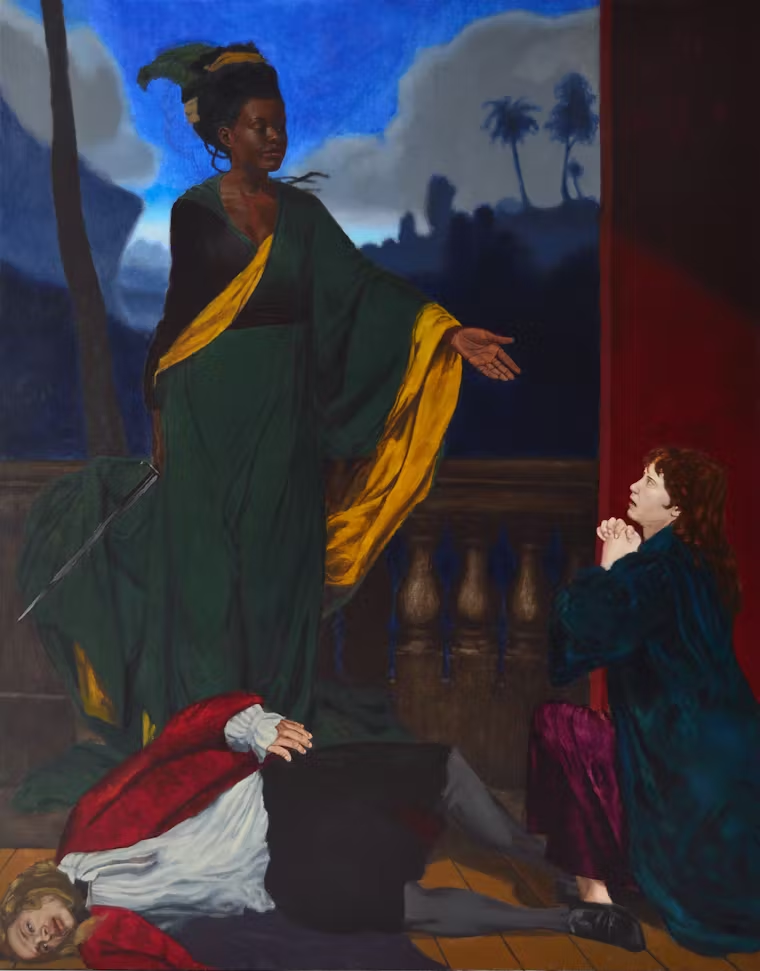
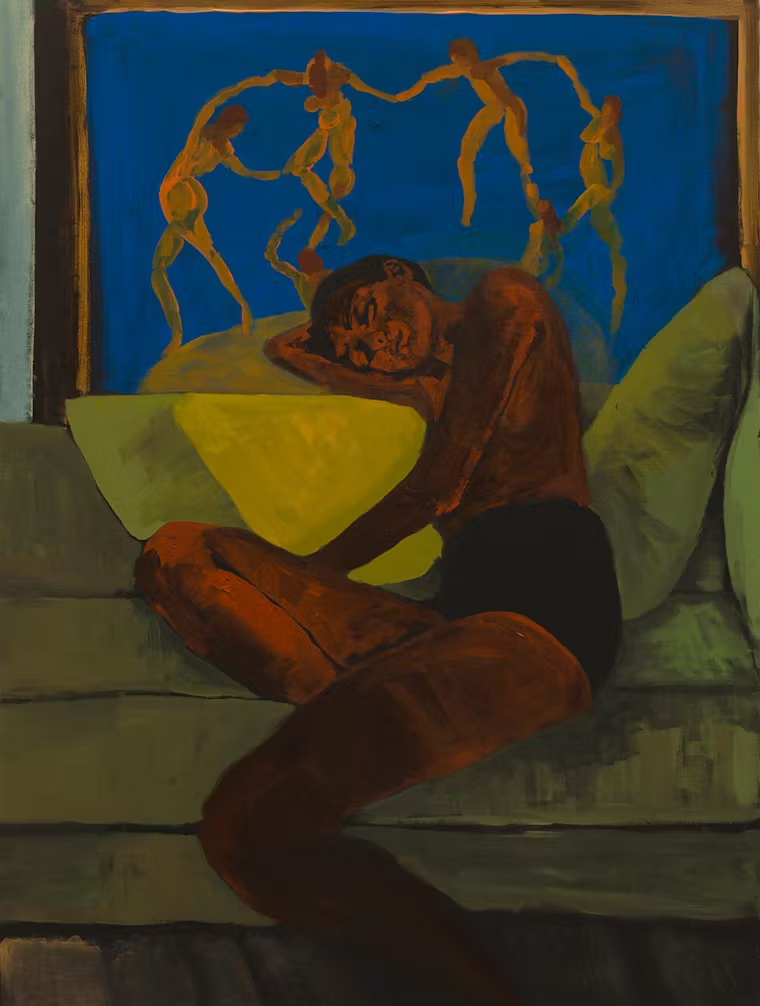
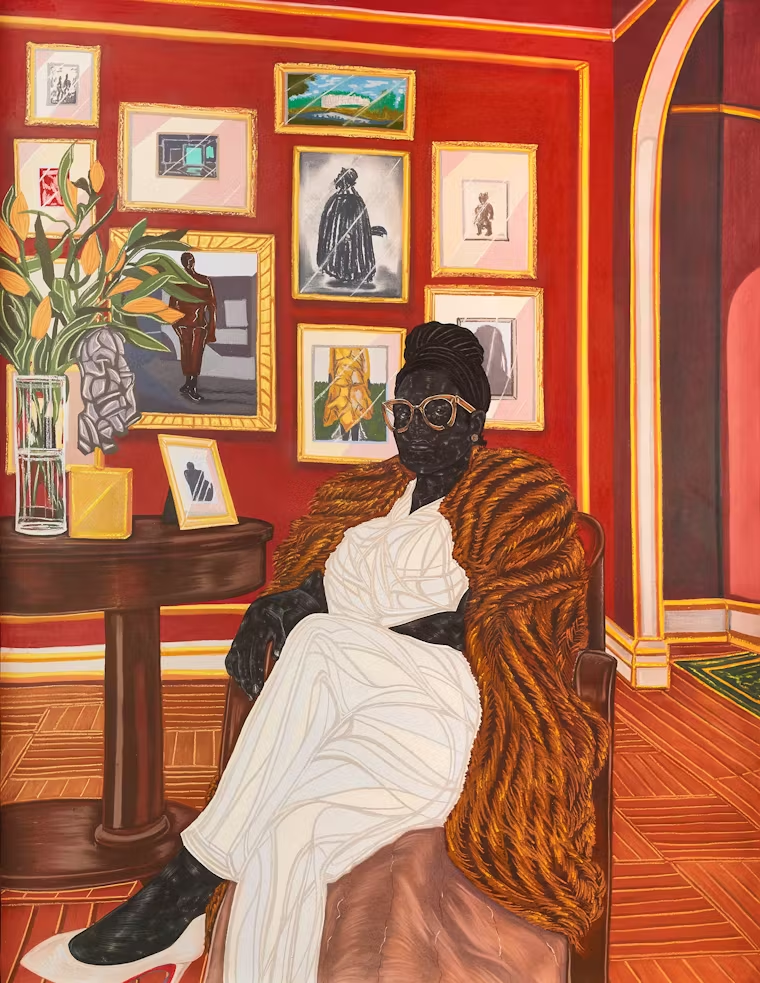
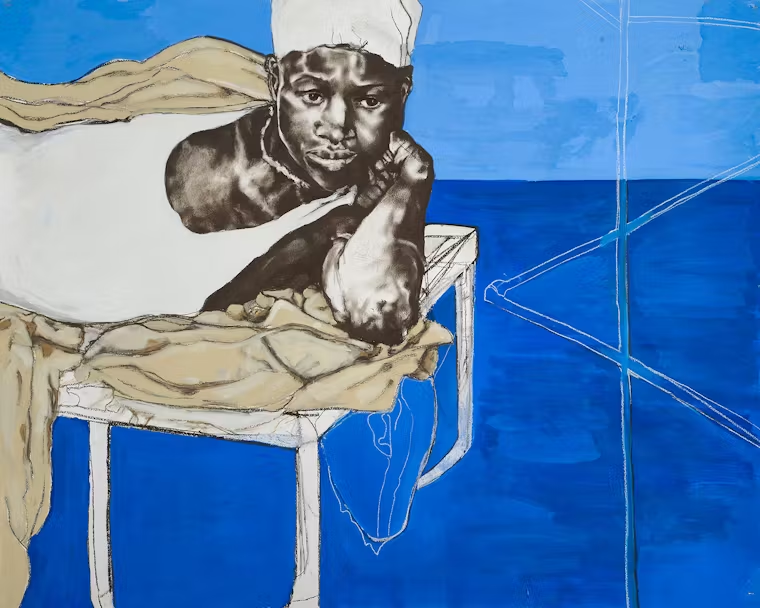
“It’s only in the 20th century that you see something of a shift,” says Eshun, whose major group exhibition, “The Time Is Always Now: Artists Reframe the Black Figure,” is currently on view, through February 9, at the Philadelphia Museum of Art. Named after James Baldwin’s call to action, the show brings together 28 Black and African diasporic contemporary artists to explore what has happened even more recently, as “artists conscious of those histories are looking back at them with a desire to question, to critique that Western canon, and to insert another layer of seeing,” says Eshun. “The invitation is to look closer at the propositions they are invoking—the richness and complexity of Black life in its fullness, in its contradictions, in its many layers.”
The curator is aware that we are currently living through an extraordinary period of creative flourishing among Black figurative artists—and experiencing an overdue rise in their prominence, in terms of both the art market and mainstream awareness. “I wanted to create a show that marked this moment,” he says. Eshun gives us an opportunity, then, to eavesdrop on a conversation that is happening right now: The work on display dates from no earlier than 2007. The diversity of style and approach is rich, but a fundamental shift unites all the artists—one that moves from the historical “looking at” the Black figure to looking with, or from the perspective of, those artists or their subject.
Name
---
Project
At “The Time Is Always Now” Exhibition, a Welcome Reframing of Black Figures in Art
Images
---
Words
---
Eshun focused on three thematic groupings. The first is “Double Consciousness,” an idea articulated by the sociologist and civil rights activist W.E.B. Du Bois to describe Blackness as a psychological state: the unique experience of living physically within but psychologically outside a predominantly white society. “It is a peculiar sensation,” Du Bois wrote, “this sense of always looking at one’s self through the eyes of others, of measuring one’s soul by the tape of a world that looks on in amused contempt and pity.”
In this section of the exhibition, Claudette Johnson’s powerful, monolithic figures, mostly women drawn from life, demand the opposite response, confronting the viewer with their presence and claiming attention. The artist herself gazes coolly from the canvas in Standing Figure with African Masks, a direct riposte to Picasso’s Cubist masterpiece Les Demoiselles d’Avignon, which was itself informed by his appropriation and narrow view of African art. Nathaniel Mary Quinn’s fragmented portraits, often of his family and friends, or of figures associated with his youth in a working-class suburb on Chicago’s South Side, are quieter but take the idea of a double consciousness almost literally. Homeboy Down the Block, for instance, in which an accentuated eye, slightly parted lips, and a panel of pretty floral fabric all come together to emphasize the vulnerability of the figure, is based on a real person from the artist’s past who, says Quinn, “on the surface presented as a street thug. You would cross the street if you saw him walking toward you. But I broke through his barrier, and what I found is a person who is highly fragile, deeply insecure, filled with doubts. Who has dreams, who wants to someday do something else with his life but doesn’t know how.”
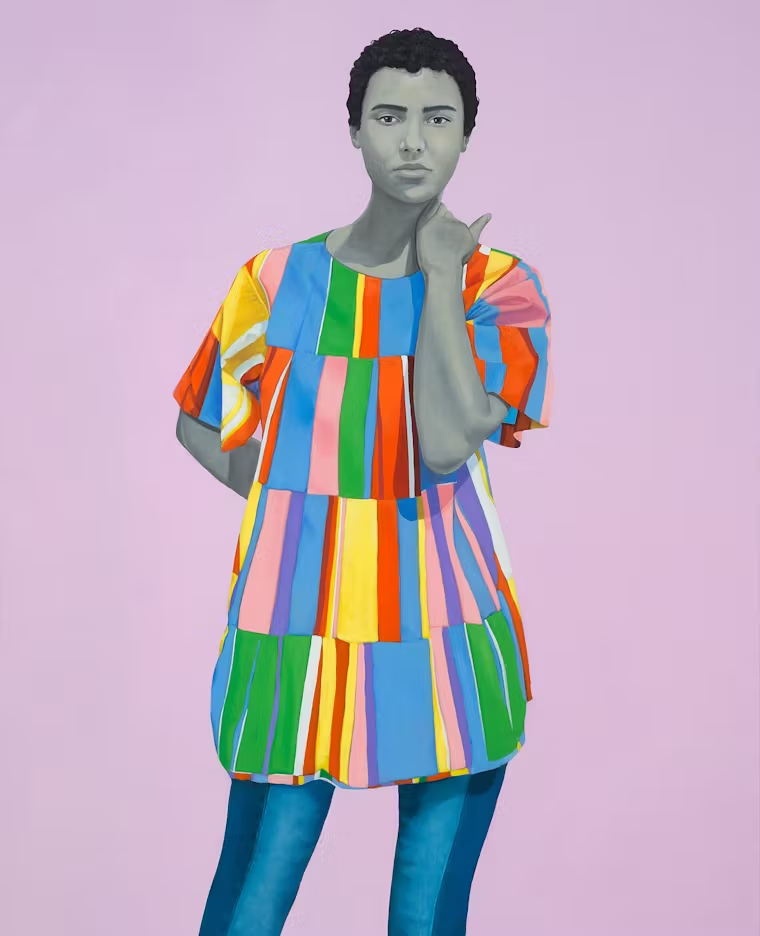
The simultaneous presence and absence suggested by Du Bois’s idea also looms large in the work of Kerry James Marshall, who uses a deep, exaggerated black to render the skin of his figures, somehow highlighting them while drawing attention to the concept of Blackness as a constructed idea. Amy Sherald, meanwhile, employs the Renaissance painting technique of grisaille, gradating shades of gray for the skin of her African American subjects, in contrast to their vibrant clothing. It’s an effective method of shifting the emphasis away from skin color to the person behind it.
The subject of art history—and its shortcomings when it comes to the Black figure—surfaces repeatedly throughout the show. In Eshun’s second section, “Past and Presence,” Barbara Walker’s striking works in graphite pencil starkly highlight how Black servitude is presented in canonical works. By reducing a scene, such as the one in Pierre Mignard’s 1682 painting Louise de Kéroualle, Duchess of Portsmouth, With an Unknown Female Attendant, to graphite on embossed paper and then intricately drawing in the Black figure—in this case, a young girl who holds a shell full of pearls and grasps a stick of red coral—Walker instantly elevates the hidden person in the original painting.