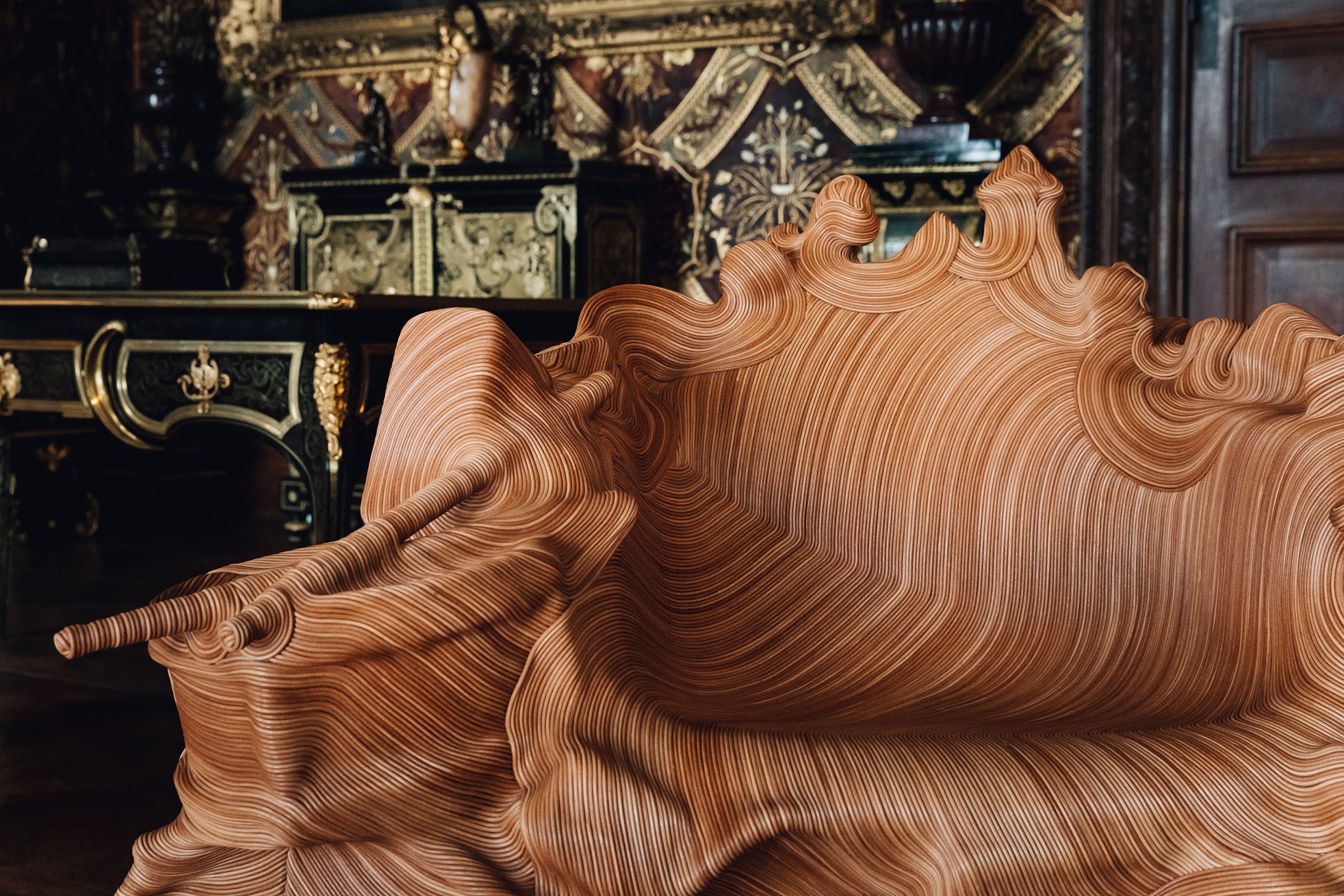
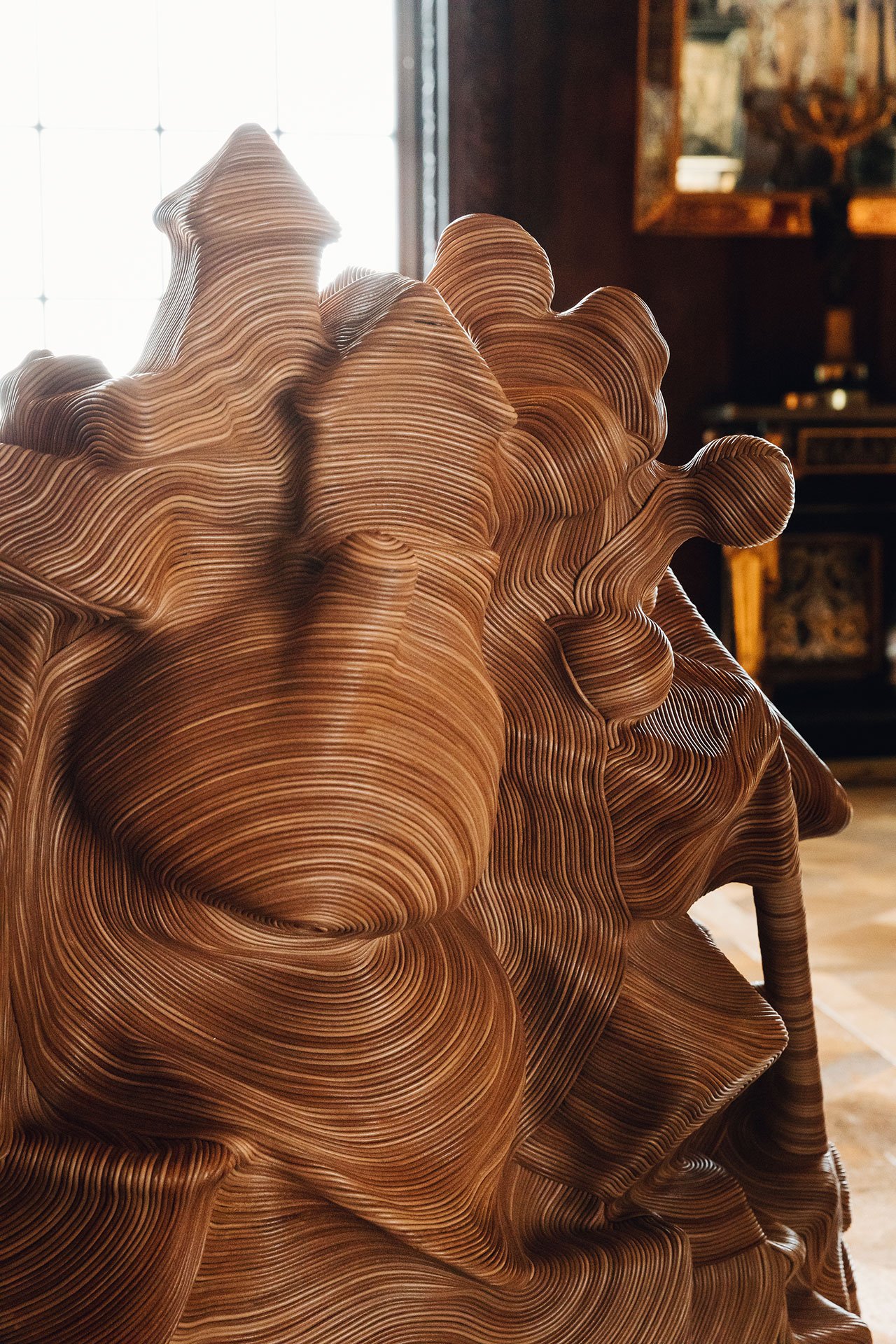
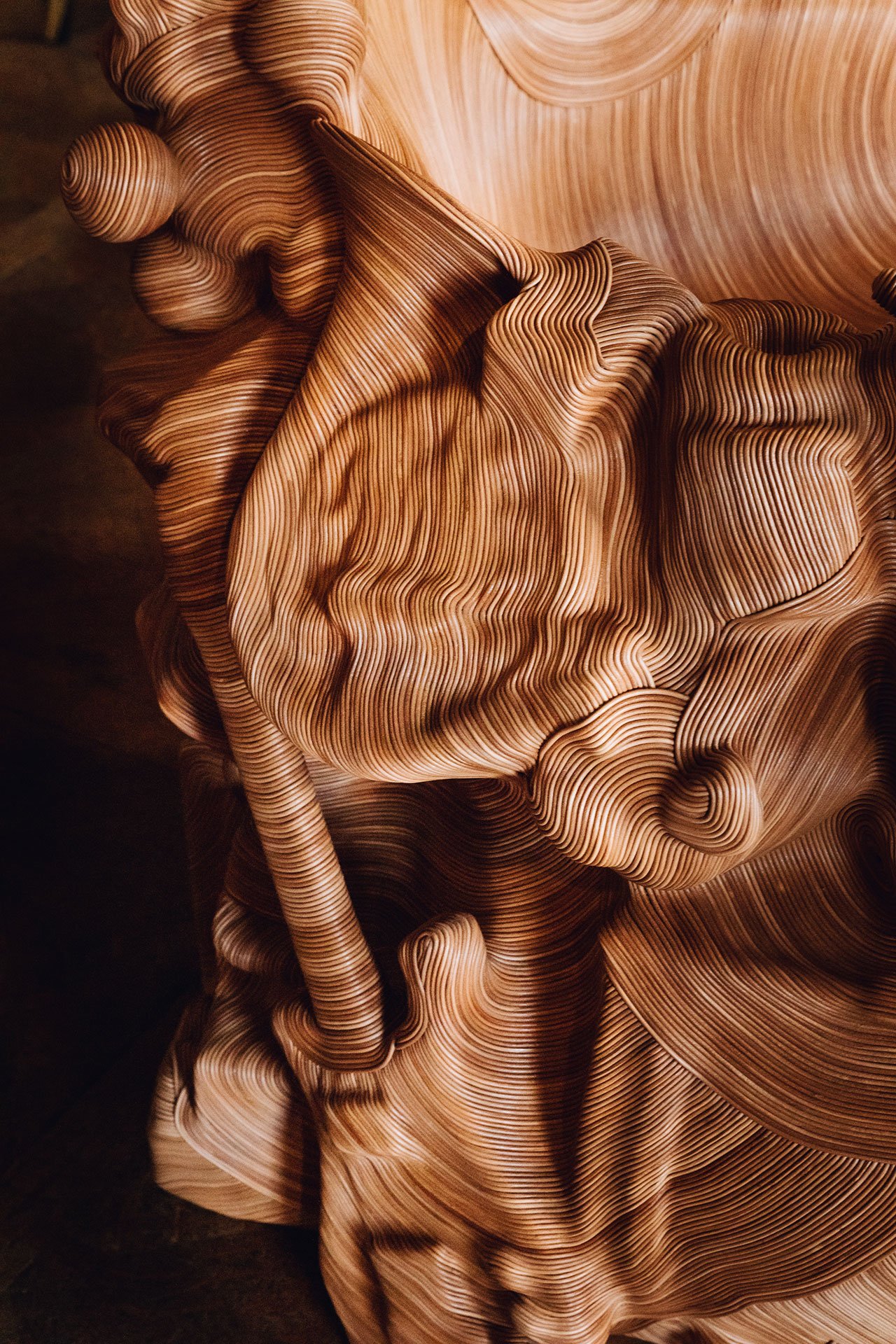
The idea for the Savage series started a decade ago when Jay was studying industrial design at Michigan’s Cranbrook Academy of Art which she pursued after her fine arts degree in Seoul in order to reach a wider audience with her work. On her way to the design studio, there were two huge dumpsters which she noticed were filling up super quickly, partly with the discarded prototypes she and her fellow students were making for big furniture companies. It didn’t take long for her to begin thinking about her own role in producing so much waste and our consumerist culture at large. “People are always buying something new,” she says, “they don’t really appreciate what they already have so they keep throwing things away”. Instinctively, she started collecting objects from the dumpsters, such as broken chairs, trays and pots that were still usable or had an interesting form. At first, there was no masterplan, “I don’t even know why I did it”, Jay confesses – fellow students joked that she was making her own dumpster in the design studio – but she soon came up with the idea to give them a new lease of life as a way to question their obsolescence.
To do so, Jay turned to natural materials and hand-craftsmanship – the antithesis of the mass-produced products that we so easily discard. Using plant-based jute rope she experimented with wrapping techniques, starting with a simple detergent box. “People couldn’t stop touching it, rubbing it, hugging it”, she remembers. For her next pieces, she combined multiple objects into a small side table, which captured top honours at the Design Quest 2011 Furniture Design Competition, and a chair for her graduation show which also won her praise and is now part of the Cranbrook Art Museum’s collection.