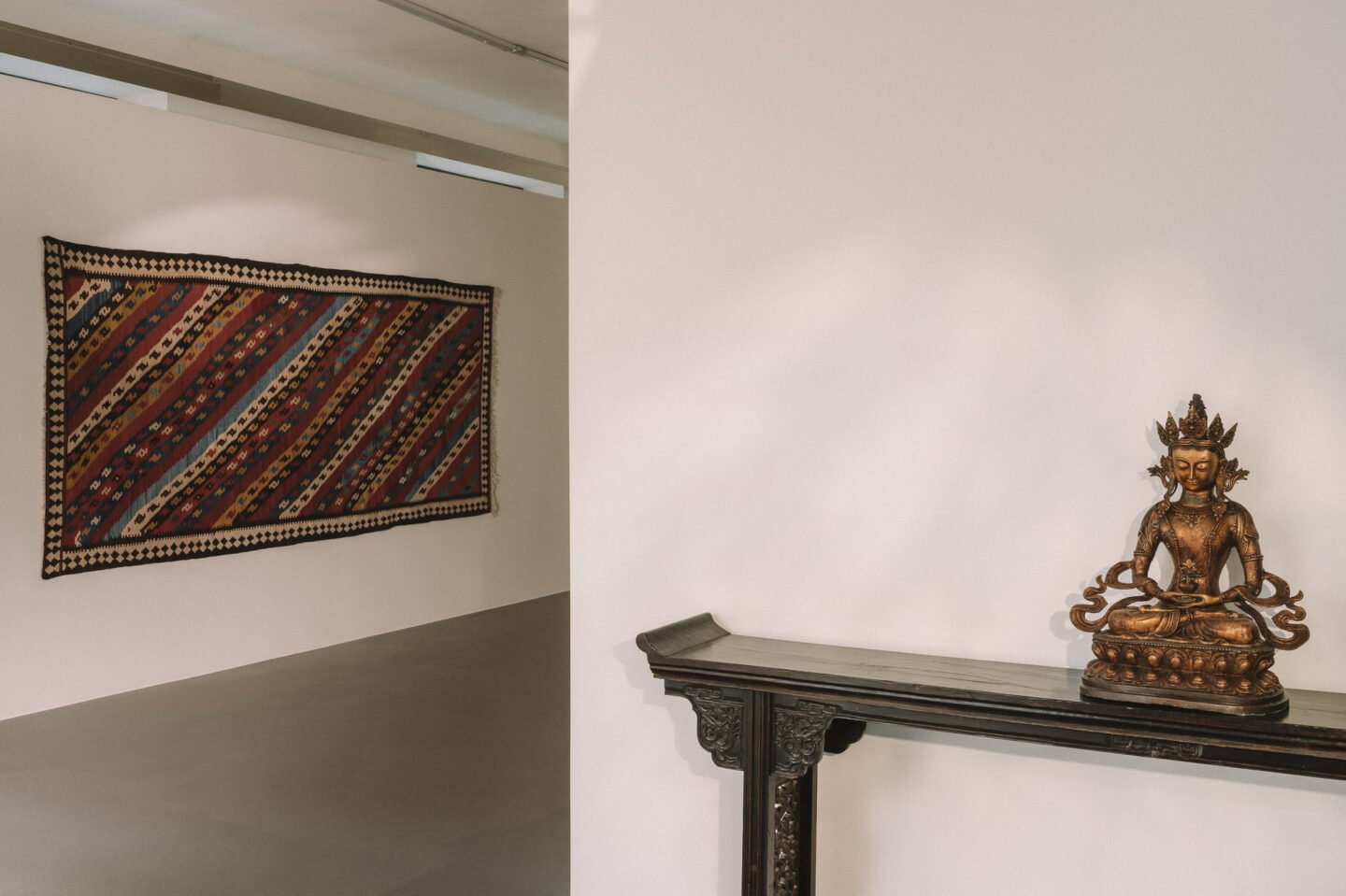
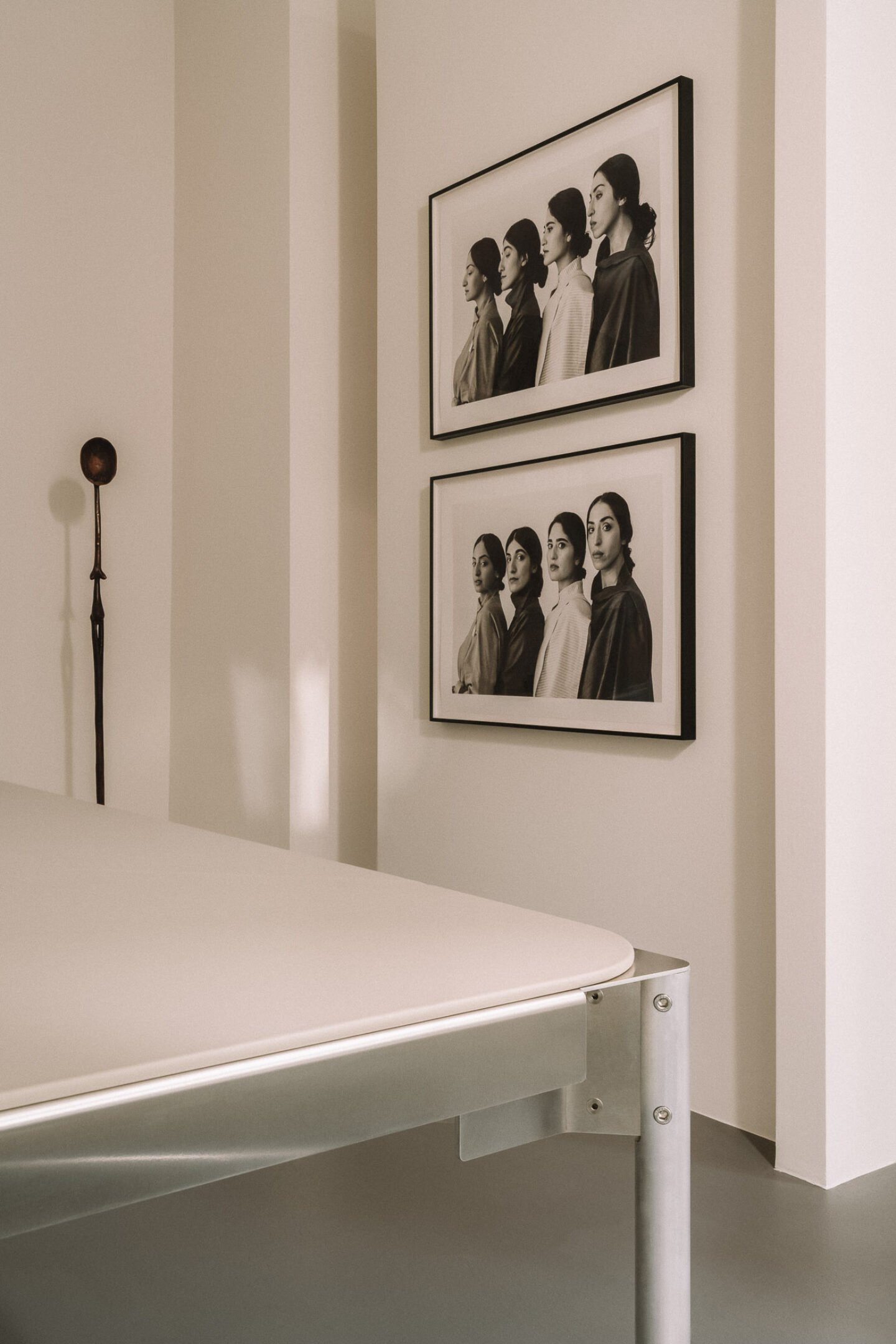
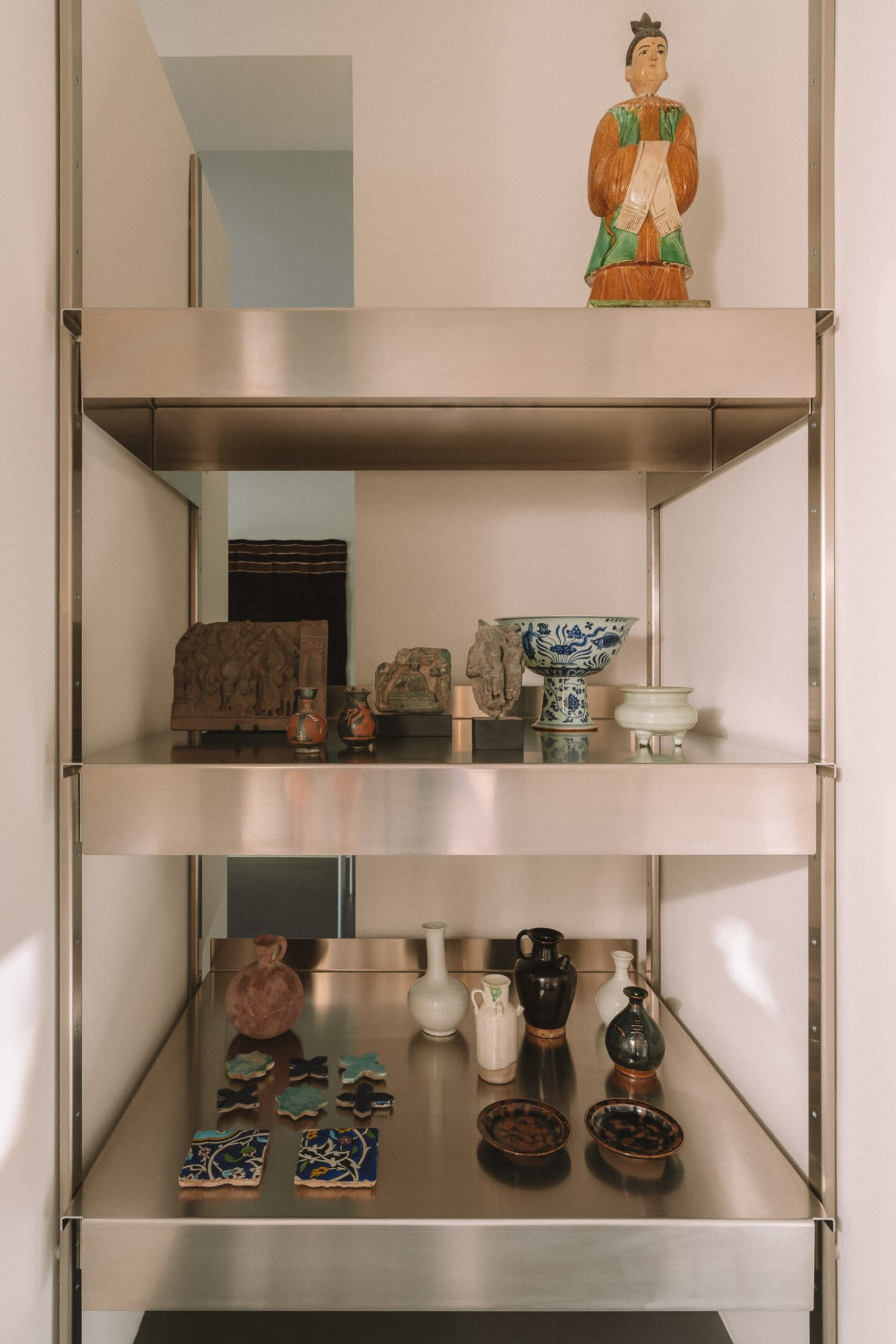
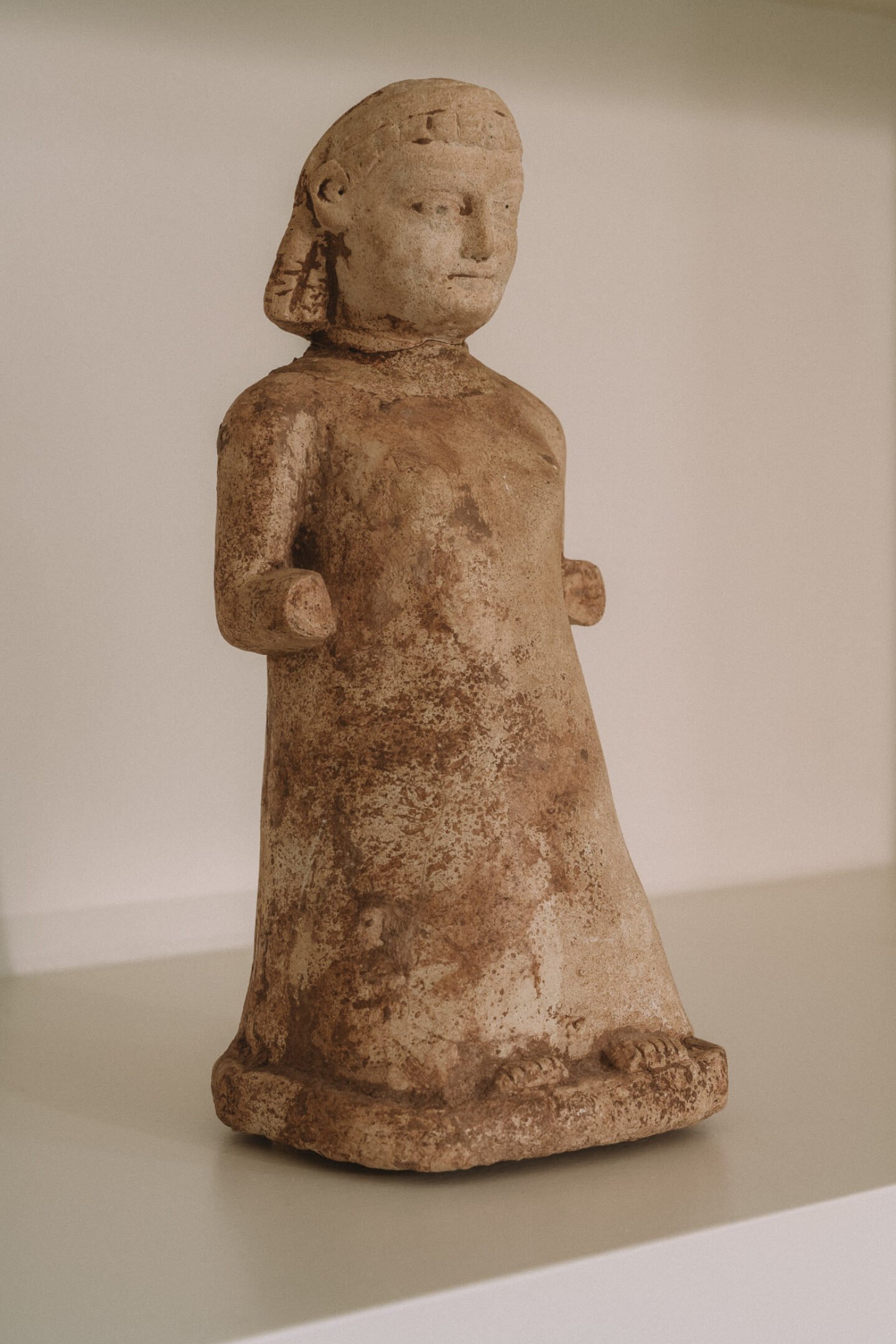
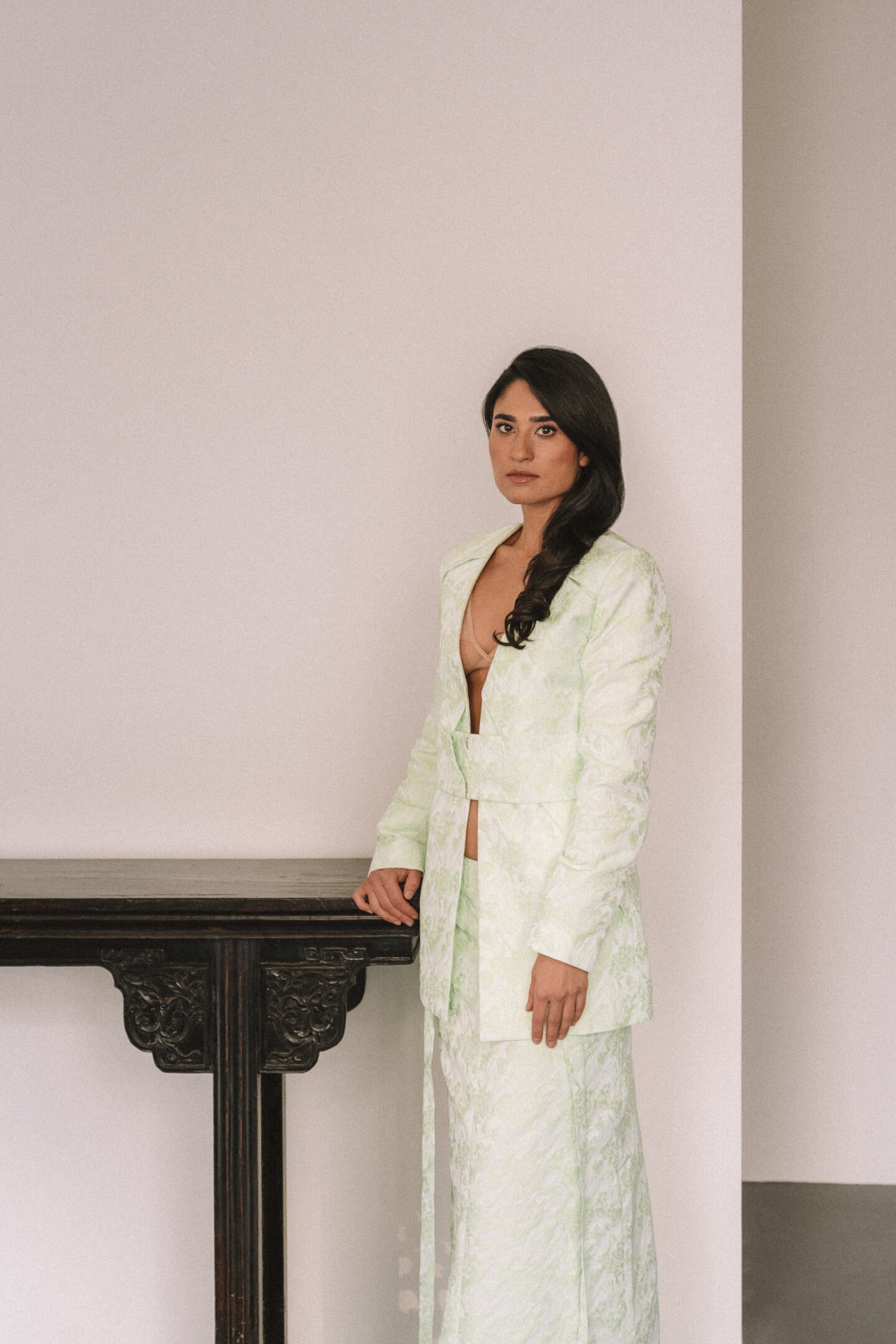
Activist. Cultural trailblazer. Successful entrepreneur. Advocate for underrepresented artists. Berlin’s youngest gallery owner. Since opening her first exhibition space in 2015 at age 26, gallerist, dealer, and collector Anahita Sadighi has been lauded with many labels. Yet in her personal and work life, she elegantly eludes categorisation, preferring to initiate intercultural and interdisciplinary dialogue to create new connections in the spaces between. In doing so, she expands the role of the gallerist beyond its traditional mandate to incorporate a plurality of perspectives, cultures, eras, geographies, and disciplines. Now, in November 2023, the dialectic between her two galleries—Anahita Arts of Asia, focusing on ancient art from across Asian and other non-Western cultures, and Anahita Contemporary, showing international contemporary painting and photography—finds its synthesis in her new namesake gallery in Berlin-Charlottenburg, designed by Gonzalez Haase AAS. In an exclusive interview on the eve of its opening, Sadighi spoke with Ignant about the vision for her next era, making space for multiplicity, and why West Berlin is where it’s at.

After graduating with an MA in Art and Architecture of the Islamic Middle East at SOAS, University of London, you opened your first gallery, Anahita Arts of Asia in 2015. Aged just 26, you were Berlin’s youngest art dealer at the time. Two years later, you opened Anahita Contemporary. While distinct in focus, each gallery was united in its purpose to increase the visibility of underrepresented topics within art history and the cultural landscape. Now that you’re merging both into a singular gallery under your name, what can we expect from this new era?

With my first gallery, Anahita Arts of Asia, I specialized in antique art, initially with a focus on Asia and countries along the Silk Road. Later, I expanded the remit to incorporate other geographies such as African and South American art. Two years later, I opened my gallery for contemporary art where I show international contemporary positions with a focus on intercultural and interdisciplinary dialogue with a view to bring together different artists from different generations. This combination of these two gallery programs is certainly a unique orientation in Germany.

My aspiration is to make underrepresented themes more visible within a contemporary understanding of art and cultural history. I think that the specific development of my various galleries—each with its different thematic focus and distinct requirements—harbors great transformative potential. The global events of the last few years have strengthened this belief. Ultimately, it’s a very personal journey that I’m on; one I hope to share with others. With my new gallery, I hope to break new ground and shape my work and my commitments—including my role as a gallerist—in a new way, or rather define them in my own way. The coming months and years will see us be involved in a new curatorial approach and exhibitions that are unprecedented in Germany.


Name


---

Project


On The Cusp Of Her Next Era, Anahita Sadighi Is Redefining The Role Of The Gallerist

Images


---

Words


---

I’m interested to hear how you define your role as a gallerist, given that you’ve forged your unique path within a heavily White male-dominated industry.

I see my work as a gallerist as a fusion of theory, scholarship, practice, and my own family history as well as my passion. The curatorial approach of the gallery is ultimately born out of all these elements. Versatility is at the core of my role as a gallerist. Particularly as a woman, and as a gallery owner and creative practitioner—as well as a musician, a pianist, a collector, and a host—I want to embrace this versatility, to draw strength and inspiration from all these areas, and to carry that inspiration forward.

My curatorial work and my engagement with art are strongly influenced by all these elements; all these realities. It’s interesting; the many facets of my role are often confronted with surprise: “Oh, you’re a gallerist, but you also do these other things!” I don’t think one excludes the other. On the contrary, each cross-pollinates the other and makes it more exciting and contemporary. Ultimately, it comes down to opening up new perspectives on the art and culture of non-Western cultures.


Feature Launching

Febraury 2025