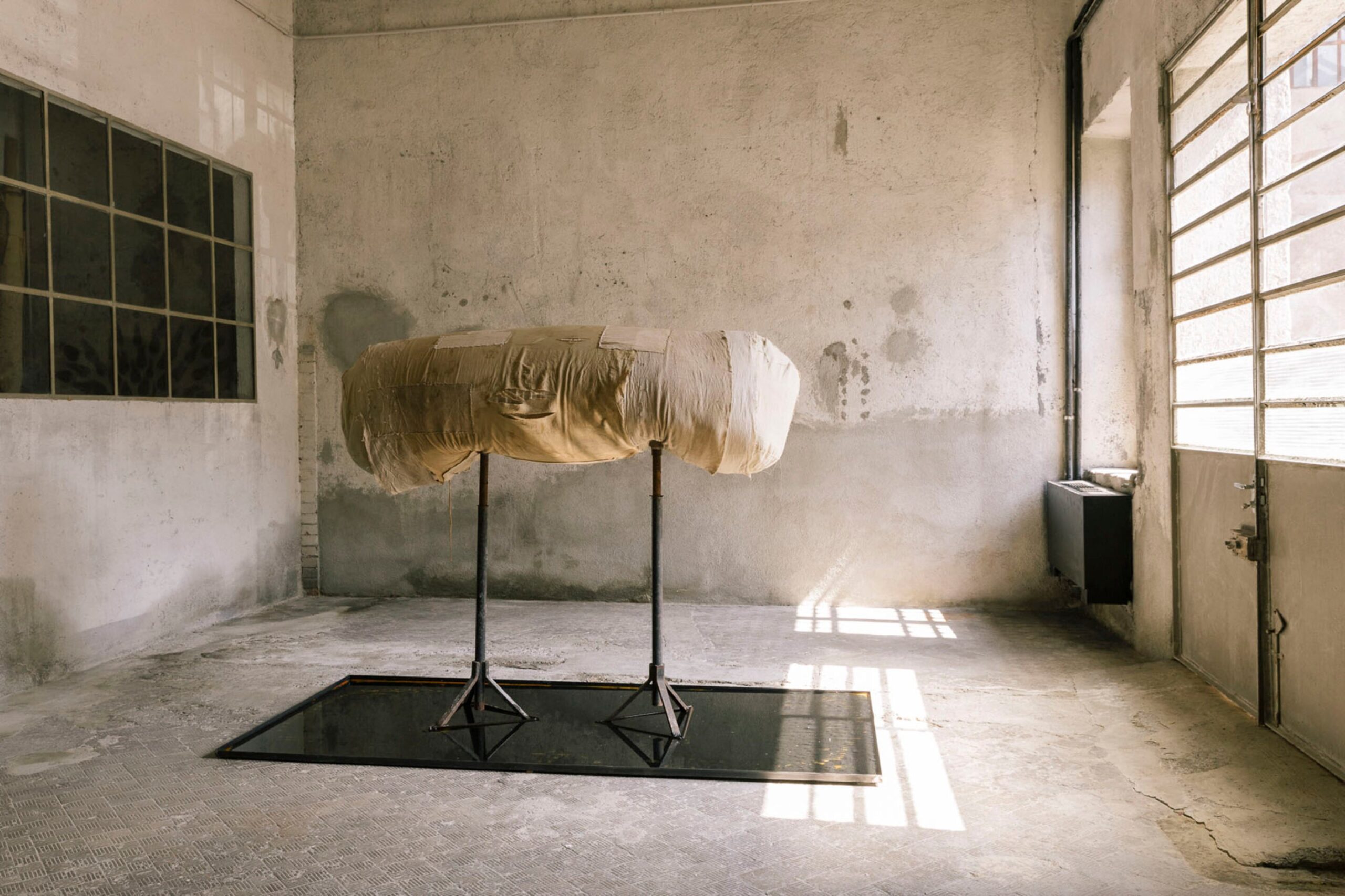
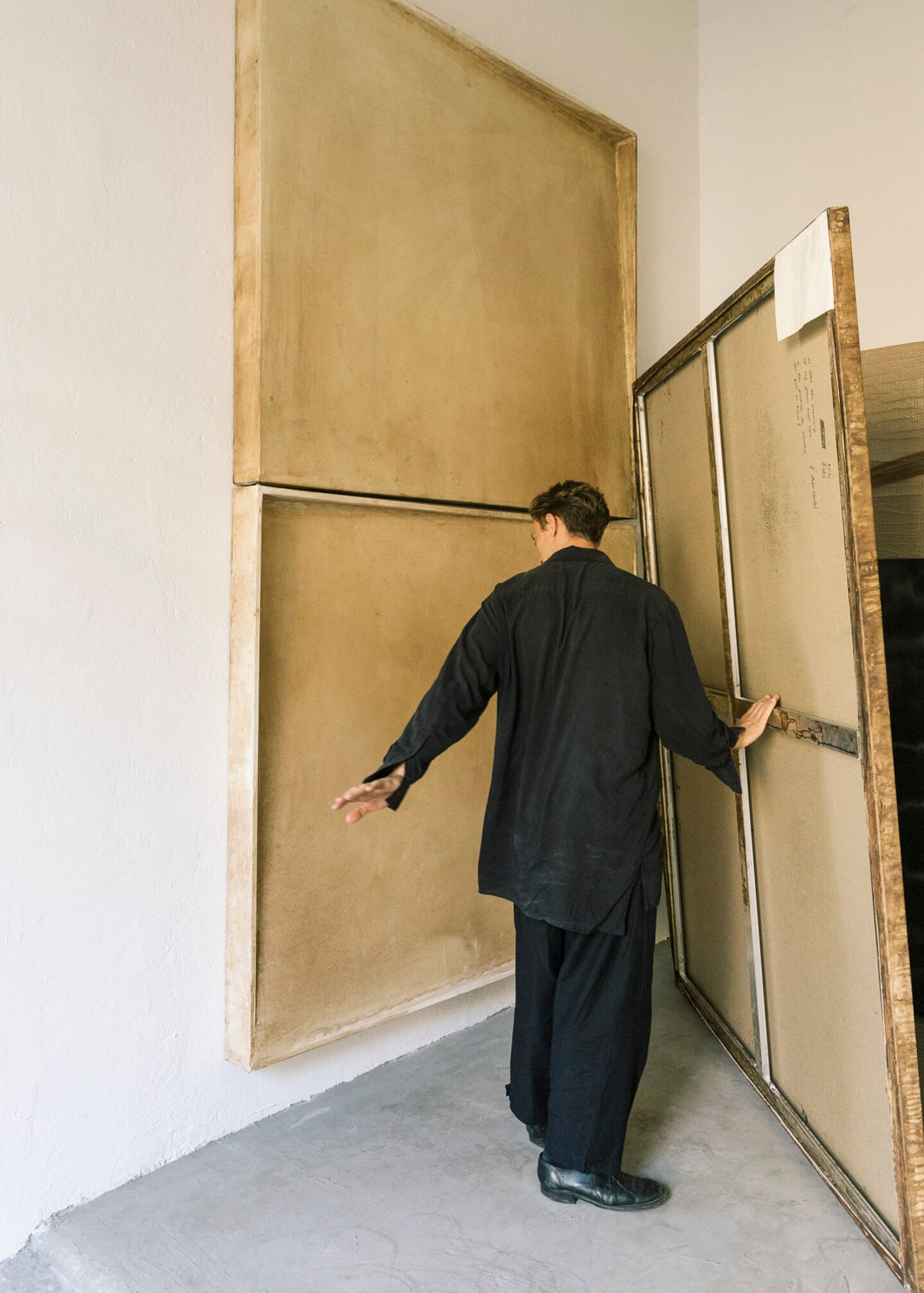
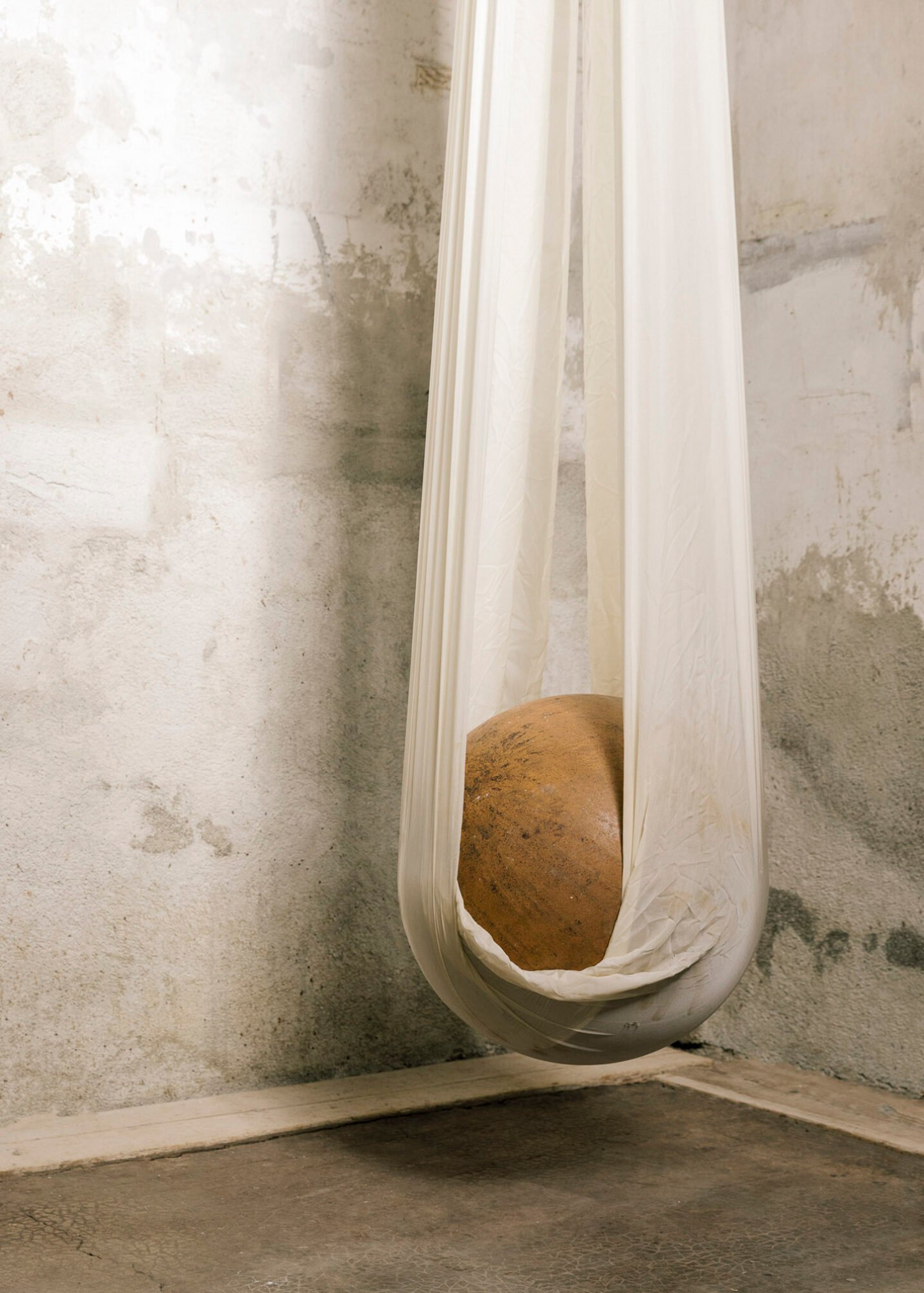
Cloudbursts of sienna bloom across large-format canvases, effusive in their warmth. With time, an apparition appears to hover through. Below the surface of Leonardo Anker Vandal’s Adagio paintings, a disquiet gathers force, drawing the viewer into the fluid mirror of minimal abstraction. In the work and world of the self-taught Danish artist, beauty and sorrow are intimately entangled. Embedded in the existential preoccupations of his 18th-century Romantic muses – Keats, Yates, Mahler – his work is forged through the “excavation of memories;” a personal therapeutic process with widespread resonance. From his studio in Brescia, Italy, accompanied by his beloved Border Collie, Nemorino, Anker Vandal speaks with radical openness about the arc of his autodidacticism, existence outside the art establishment, and the figurative trail of breadcrumbs he hopes to leave for those who need it most.
At 25, Leonardo Anker Vandal had a hallucinatory vision. An enormous tower made of bird cages appeared before him, stretching 30 meters tall. “There’s darkness entering this tower,” he recalls. “All the bird cages are empty, all the doors just open and there’s just this sound of silence, a bit like the sound of space. There is one way of escaping – a hatch up above, where there is light.”
The image came to his mind’s eye at a low point. Anker Vandal had been seeing a psychiatrist, processing early childhood trauma, and difficult memories were coming to the surface. “From that day, that vision became everything for me,” he says. “I had to explore it further.” His inquiry led him to immersion in the writings of Freud and Jung, uncovering the notion of repressed memory, whose “excavation”, as he puts it, is a throughline of his practice.
The cage, or prison, looms equally large as a Leitmotif. “My early work was about seeing the body as a sense of confinement, where you want to escape the exterior of your own shell, which is almost impossible.” To “go to the Romantic side”, he references his foremost muse, poet John Keats, who wrote to his fiancée, Fanny Brawne, of wanting to be a butterfly who lives for just three summer days, as in those three days he could feel more than 50 years could contain.
Riffing off the metaphor of the butterfly and its metamorphosis from a constricted chrysalis to a creature in flight, Anker Vandal muses, “We [as humans] can’t. We’re stuck in this mortal shell. But through closing our eyes, we have this possibility to really go into this incredible universe within our brain. It’s kind of difficult to access because at first, we may just see this black emptiness, which most fret about. Then it kind of opens up and expands.”
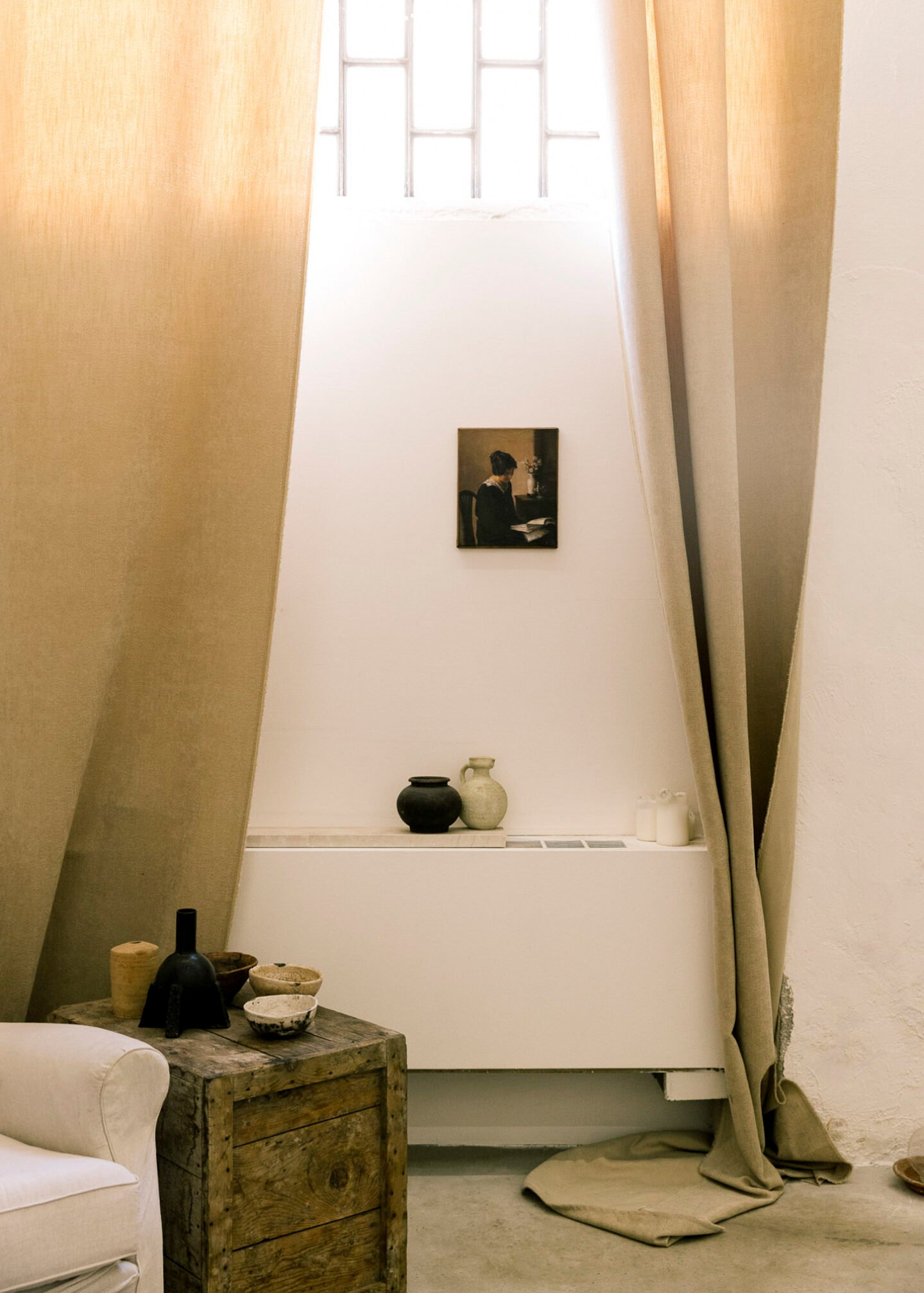
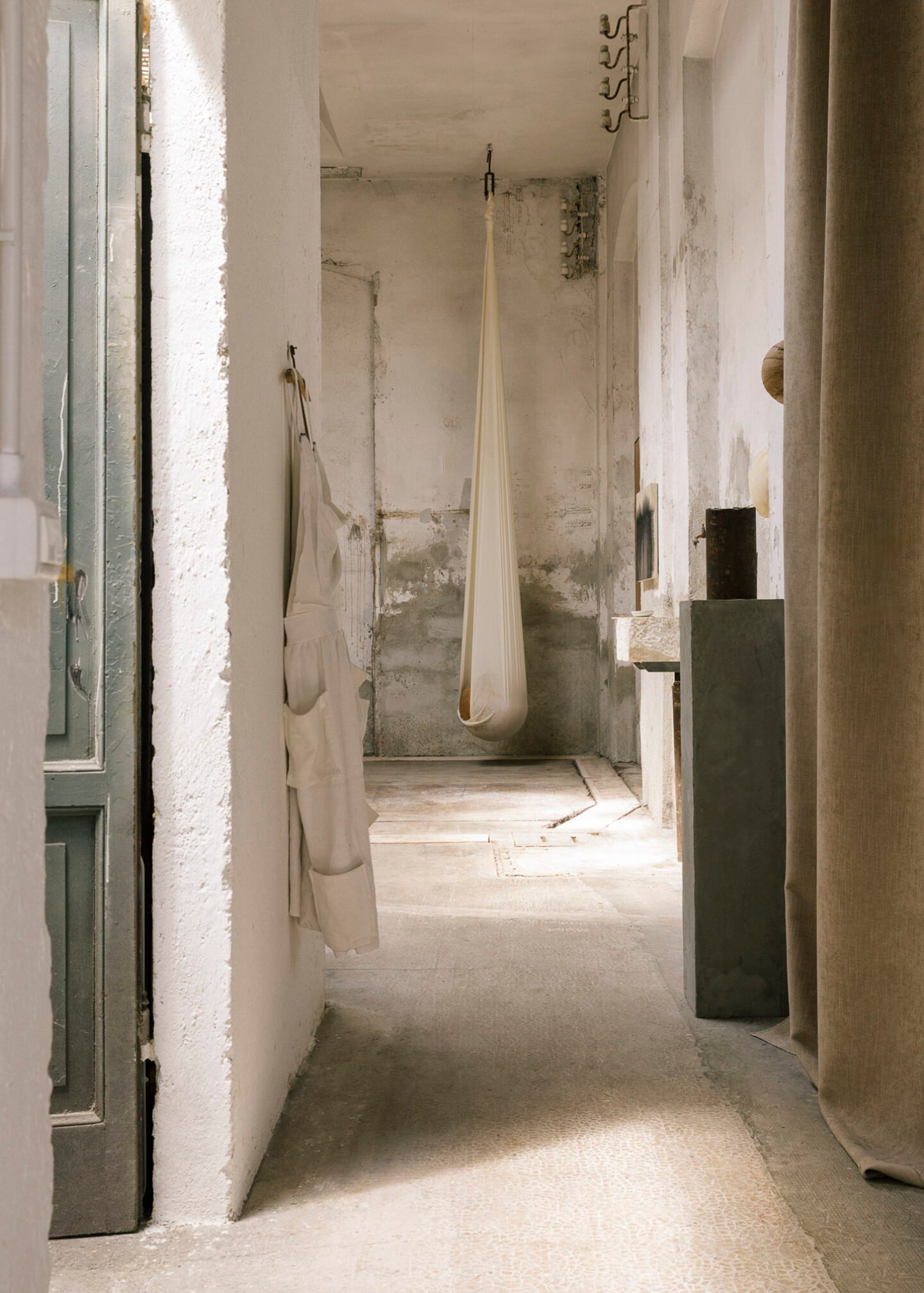
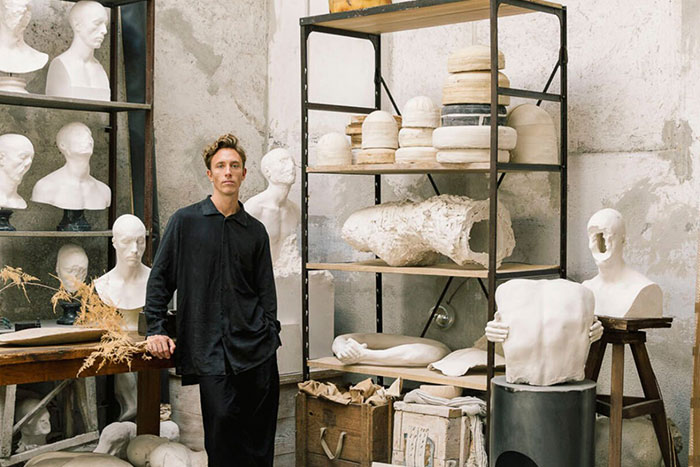
Facing the darkness and bringing it to light is central to the Danish self-taught artist’s deeply introspective practice, currently situated in Brescia, Lombardy. A long period of searching led Anker Vandal to an expansive 350 square meter studio, a building in disrepair that he fixed up. “I spent everything I own to make this my little chapel.”

Name
---
Project
The Inner Work of Leonardo Anker Vandal
Images
---
Words
---
While an artistic streak runs through several generations of amateur painters in his family – “Is there something inherent?” he questions – Anker Vandal has no formal artistic training. His devoted intellectualism and rich archive of literary references belie the fact that he completed his institutional education at 16. He began painting in his early 20s, furiously experimenting in a small storage space in his small Copenhagen loft apartment. “When I first started, I had no idea what I was doing, where I was going, where this would take me,” he said. I felt like there was a sense of intuition that I had to follow.”
Moving to Paris at 25 “completely changed the landscape,” he recalls. Weekly visits to the Palais de Tokyo helped him to forge his taste and begin to find his style. As creatively inspiring as that period was, it was also shaped by intensive health struggles. “When I was 25, I had, I would say, a pretty severe breakdown,” he shares matter-of-factly. “That led me to understand that maybe I do have a voice, maybe I do have a story to tell.”
During this time, Anker Vandal’s inquisitive spirit kept him afloat. “It’s kind of weird that even though you’re on the bottom of the lake and you cannot get out of bed and everything is tough, somehow curiosity can still manifest itself.” His curious mind continues to propel him forward today. Art is a form of working through, a way of processing the trauma of a childhood spent between orphanages and foster families. Above all, it’s a way of life he inhabits completely; at once intensely personal and a bridge to universal connection.