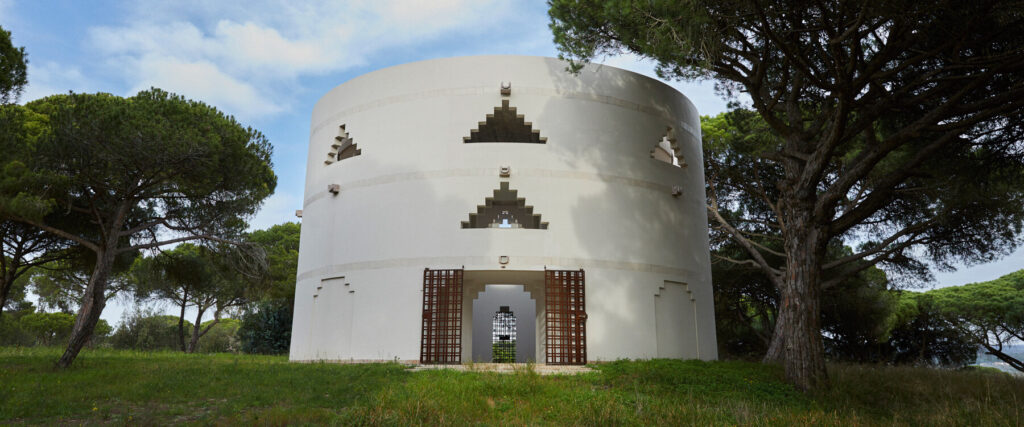
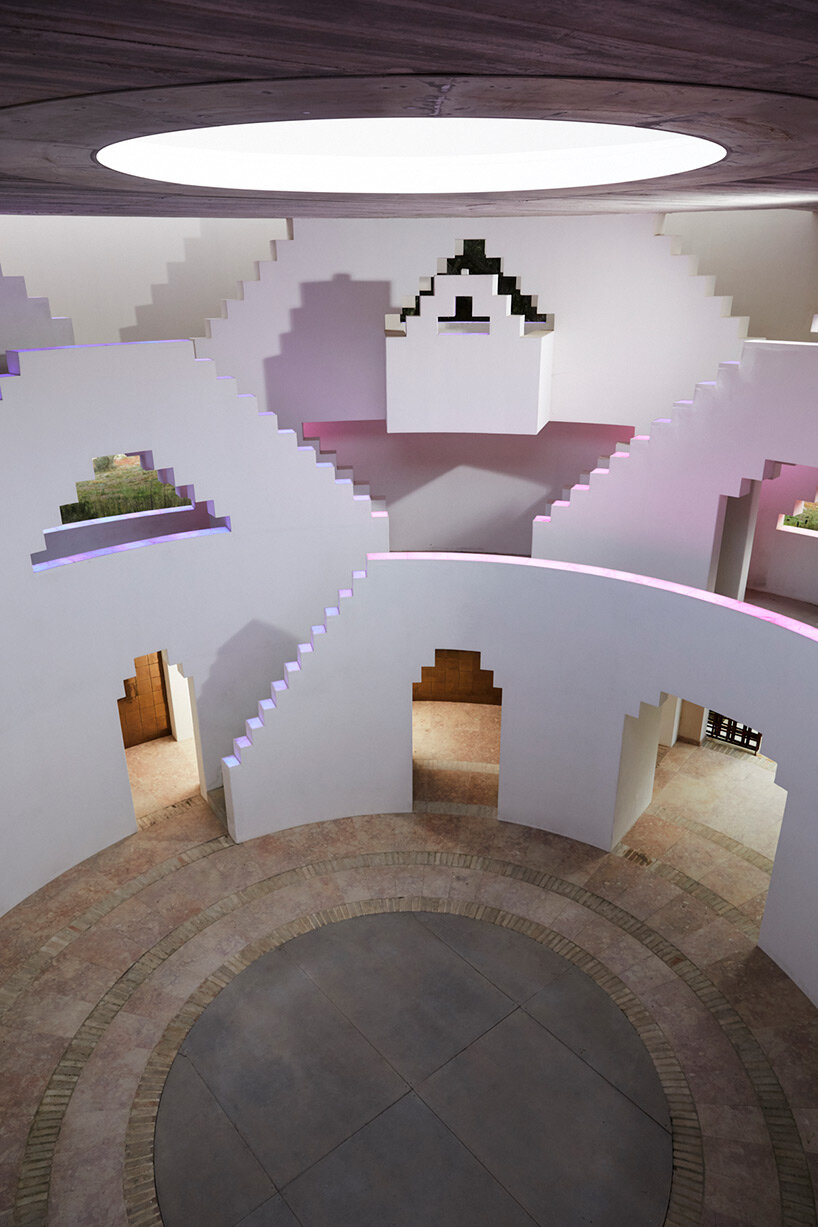
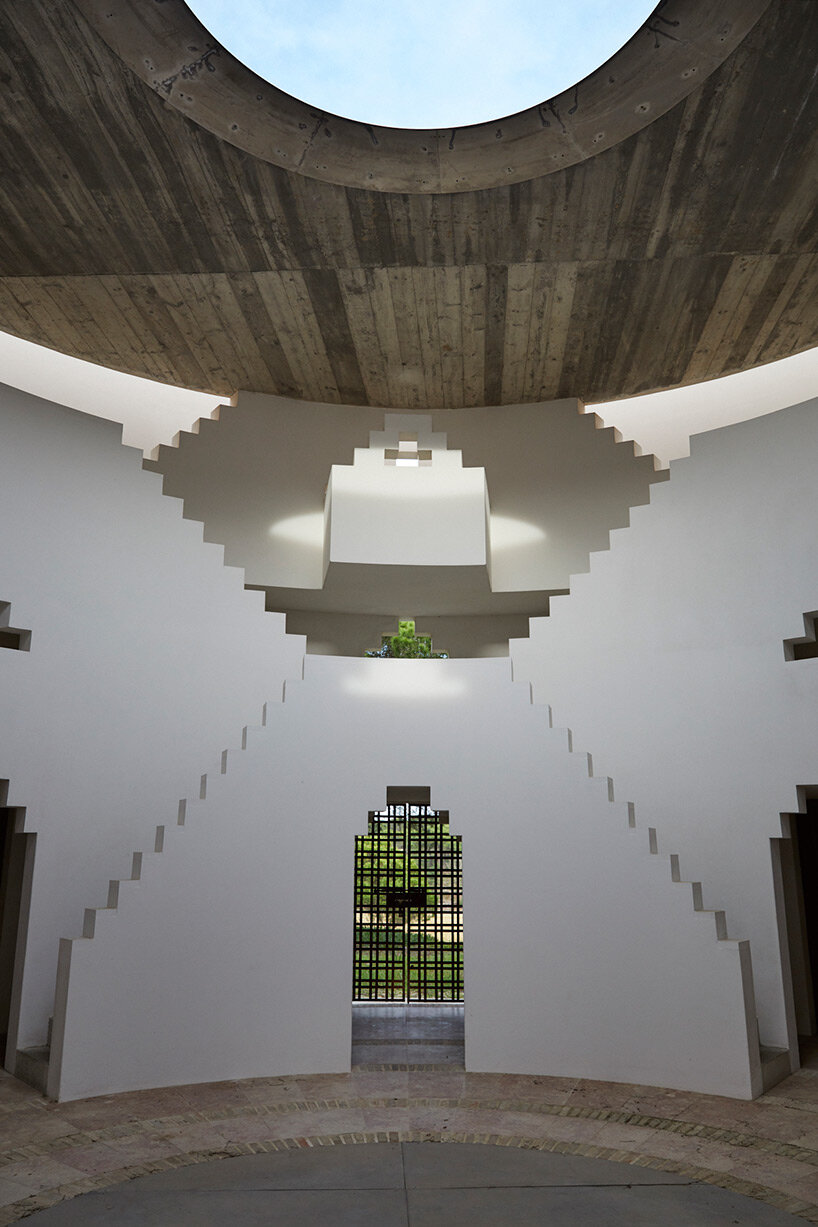
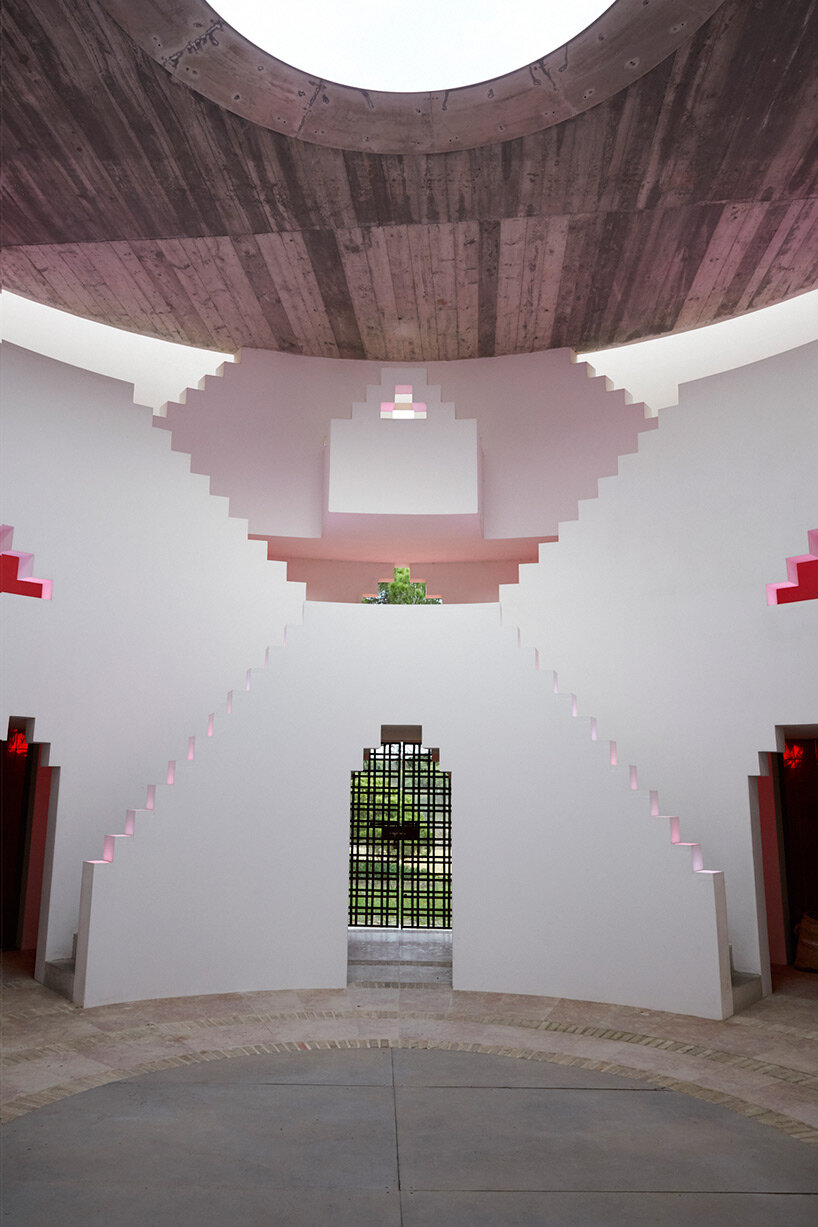
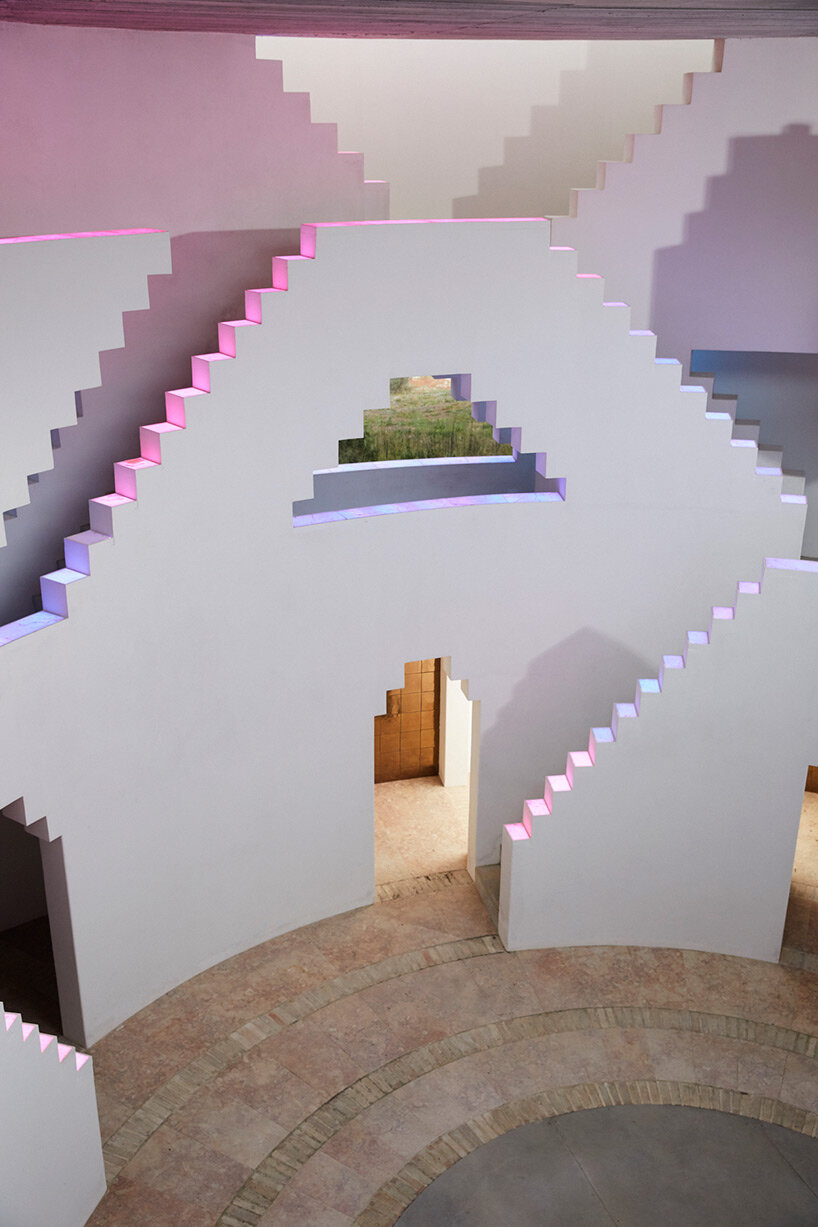
In the secret beach town of Melides in Portugal, architect Tarek Shamma has built ‘La Folie,’ a party tower for world-renowned designer Christian Louboutin. Inspired by the Step Wells of Rajasthan and the Jantar Mantar Observatory, the unique structure was created in a wooded enclave of umbrella pines on a peninsula jutting into a lagoon, as a circular tower with geometric openings and crisscross stairs. As its name suggests, La Folie has no other function than to please the eye and the mind — it’s a place to read, meditate, or host friends for drinks and parties.
Name
----
Project
‘La Folie’ tower for Christian Louboutin
Images
---
Words
---
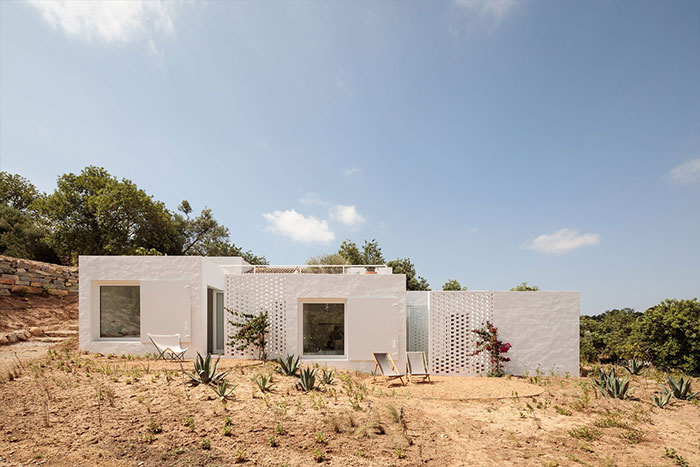
Another of the intentions of the project was to respect the natural topography of the land. In order to comply with it, the building was adapted to the existing elevations through half floors, which allowed a direct relationship with the exterior on the South and West side of the house. The useful space was capitalized on by the installation of the ladder in the center so as to minimize the circulation areas and promote the path that culminates in the roof terrace – the fifth elevation – where the discrepancy between the levels is clear through the volumetric organization. Analyzing it a posteriori, this association of spatial elements carries with it some ‘Loosian’ reminiscences.
There is a strong contrast between the exterior and the interior. The façade functions as a shell that occasionally allows, through openings, the contact between the house and the world. When the shutters are closed, the façade is its own denial, it is an anti-façade. It cancels an interior, suggesting only matter. It would become an abstract sculpture if the two copper gargoyles did not denounce a functional concern. The ornamental exaggeration of those gargoyles contrasts with the dryness of the façade.

When they are opened, the portals reveal an interior with different materialities that takes its inspiration from vernacular architecture. The portals of the South elevation (facing the chapel) invoke the gilded carving and also recall, in an abstract way, the medieval religious paintings created in the triptych. The window frames are made of wood, just like the skirting of the entrance floor, and both are painted with colors used in times gone by. The skirting has a freedom that allows it to wander through the area, assuming a character which is both plastic and functional. The floors of the ground level are made of terrazzo with brass joints, and the remaining levels have wood floors with open joints. The interior doors do not interrupt the plane of the wall – they choose one side and lean back. The house is old rather than modern. The swimming pool is what it is.